

8 min read
Feb 27, 2026
Dutch lap vs. straight lap siding: learn the real differences in curb appeal, price, and performance. See which option works best for your home’s style and budget.

Choosing new siding is one of the biggest exterior decisions you’ll make as a homeowner. And once you start researching, one question comes up fast: dutch lap vs. straight lap – what’s the difference, and which one actually looks better on your house?
Both are types of horizontal lap siding. Both protect your home. Both come in a range of materials. But they create completely different visual effects on your exterior. One gives you clean simplicity. The other adds shadow, depth, and a bit of old-world charm.
This guide breaks down the real differences so you can choose with confidence – whether you’re in New Jersey, Pennsylvania, or anywhere in the tri-state area.
Lap siding is a broad category. It refers to horizontal boards installed so that each row slightly overlaps the one below it. This overlap sheds water and creates a layered, protective shell around your home.
Straight lap siding is the most traditional version of this design. Each panel is flat. The surface is smooth and uniform, with clean horizontal lines running across the exterior. There’s no groove, no bevel, no decorative profile. Just straightforward overlap.
You’ll also hear it called clapboard siding or traditional lap siding. It’s been a staple of American architecture for centuries. Early colonial homes used hand-cut wood clapboards, and the style has never gone out of fashion. Today, straight lap siding remains the go-to choice for colonial homes, ranch-style houses, and contemporary builds. Its simplicity is its strength. It pairs well with virtually any trim, color, or accent material without competing for attention.
Dutch lap siding starts with the same horizontal layout. But there’s one key detail that changes everything: a concave notch carved into the bottom edge of each panel.
That small groove creates a visible shadow line between rows. The effect is subtle but powerful. Instead of a flat surface, your exterior gets dimension. Light plays across it differently throughout the day. The home looks more textured, more layered, more crafted.
The name traces back to Dutch and German settlers who brought this woodworking technique to the American colonies. They hand-planed each board to create that distinctive cove profile. It was a mark of craftsmanship. You might also see it referred to as German siding or cove lap, though dutch lap vinyl siding is by far the most common version installed today.
Style-wise, dutch lap siding feels right at home on Craftsman bungalows, Victorian-era houses, Greek Revival facades, and modern farmhouse designs. It adds character without going over the top.
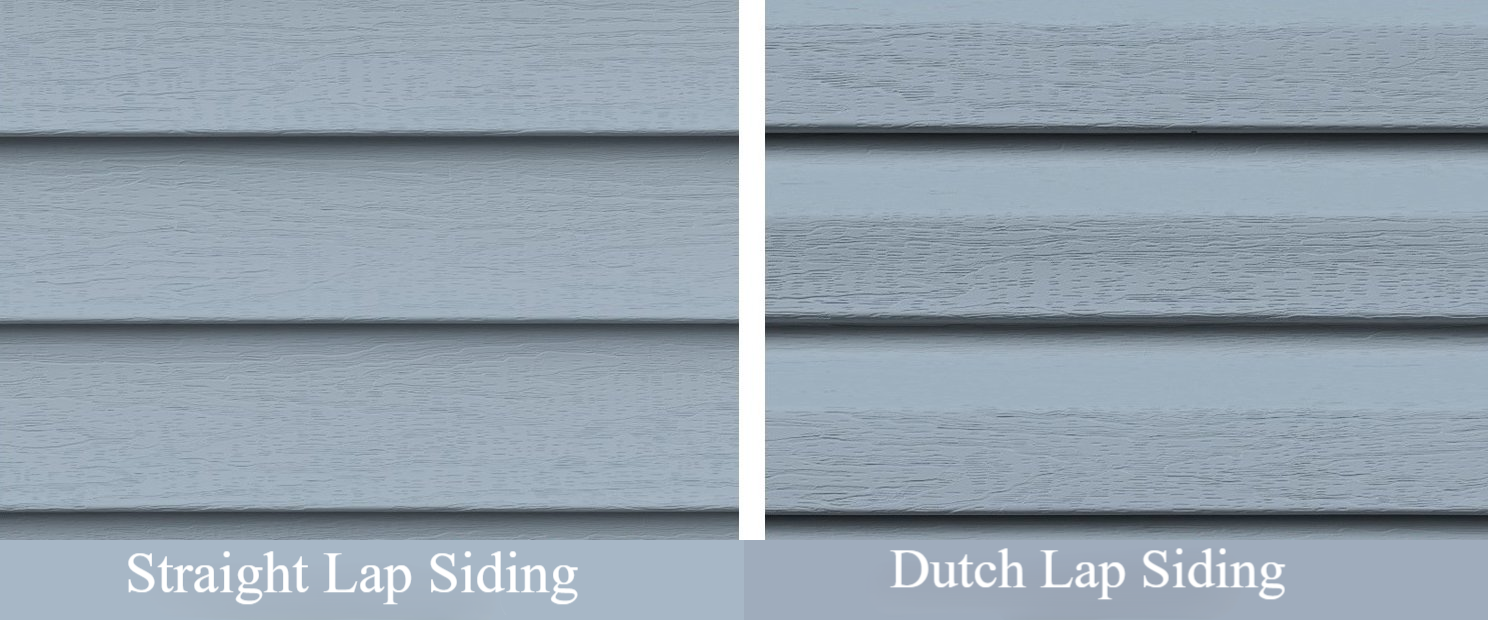
Both styles share the same DNA. Horizontal panels, overlapping rows, solid weather protection. But the difference between dutch lap and traditional vinyl siding shows up the moment you stand back and look at the finished wall. Let’s break it down feature by feature.
This is where the choice really matters.
Dutch lap delivers a textured, dimensional look. Those shadow lines catch the eye and give the exterior a sense of depth that flat panels simply can’t match. It feels premium. If you’re going with lighter shades like white, cream, or light gray, the shadows become even more pronounced and elegant.
Straight lap keeps things clean and minimal. The flat profile creates a smooth, uniform surface that reads as modern and polished. It works beautifully across a wide color palette, from deep navy to classic beige. If you prefer understated curb appeal, straight siding vs. dutch lap is an easy call – straight lap wins on simplicity every time.
Dutch lap shines on homes with architectural personality. Think Craftsman bungalows, Victorian-era builds, Greek Revival facades, and farmhouse exteriors. The shadow lines echo the handcrafted feel these styles are known for.
Straight lap belongs on colonial homes, ranches, Cape Cods, and modern contemporary designs. Its flat profile complements symmetry and minimalist aesthetics without adding visual noise.
That said, neither style is locked to a single look. Both are versatile enough to work on nearly any home. The difference is character. Dutch lap brings more of it. Straight lap lets other design elements do the talking.
When comparing dutch lap vs. straight lap vinyl siding, the profile is the only real difference. Both come in the same core materials: vinyl, fiber cement, and wood.
Vinyl siding is the most affordable and popular option across New Jersey and Pennsylvania. It’s lightweight, low-maintenance, and available in dozens of colors. Fiber cement siding, especially James Hardie products, offers superior durability and a more authentic wood-grain texture. It costs more upfront but holds up for decades. Dutch lap wood siding delivers the most traditional aesthetic. Real wood has warmth that no manufactured product can fully replicate, though it demands more upkeep over time.
Dutch lap panels tend to be slightly thicker due to the milled profile. At American Quality Remodeling, we install all three materials and help homeowners find the right balance between budget, appearance, and long-term performance.
Here’s the good news: when you’re comparing straight lap vs. dutch lap in terms of durability, the profile itself doesn’t make a meaningful difference. What matters is the material underneath.
Vinyl siding typically lasts 20 to 40 years with minimal care. Fiber cement can push past 50 years and stands up to moisture, insects, and extreme temperature swings. Wood is naturally durable but needs regular sealing and painting to prevent rot.
Living in New Jersey or Pennsylvania means your siding faces humid summers, freezing winters, and everything in between. Quality installation is just as important as material choice. Poorly installed panels invite water intrusion regardless of style.
Straight lap siding is easier to install. The flat panels align quickly, and cuts are straightforward. Most crews can move through a project at a steady pace.
The Dutch lap requires more precision. Those concave grooves need to line up perfectly from panel to panel, or the shadow lines look uneven. It takes experienced hands to get it right. This is one area where hiring a skilled contractor makes a noticeable difference in the finished product. Our team at American Quality Remodeling has installed thousands of siding projects across the tri-state area, and we know how to make both styles look flawless.
Both styles are refreshingly low-maintenance. A gentle power wash once or twice a year keeps the surface looking fresh. Inspect for cracks or loose panels after major storms, and you’re covered.
The one small difference: dutch lap’s grooved profile can trap a bit more dirt and pollen in those concave channels. It’s not a dealbreaker, but it does take slightly more attention during cleaning. Straight lap’s smooth, flat surface rinses off faster.
Dutch lap siding generally costs 5 to 15 percent more than straight lap siding. The premium comes from the more complex panel profile and the extra labor required during installation.
But here’s the perspective. The material you choose affects the price far more than the style. Upgrading from vinyl to fiber cement, for example, will change your budget more dramatically than switching from straight lap to dutch lap ever would.
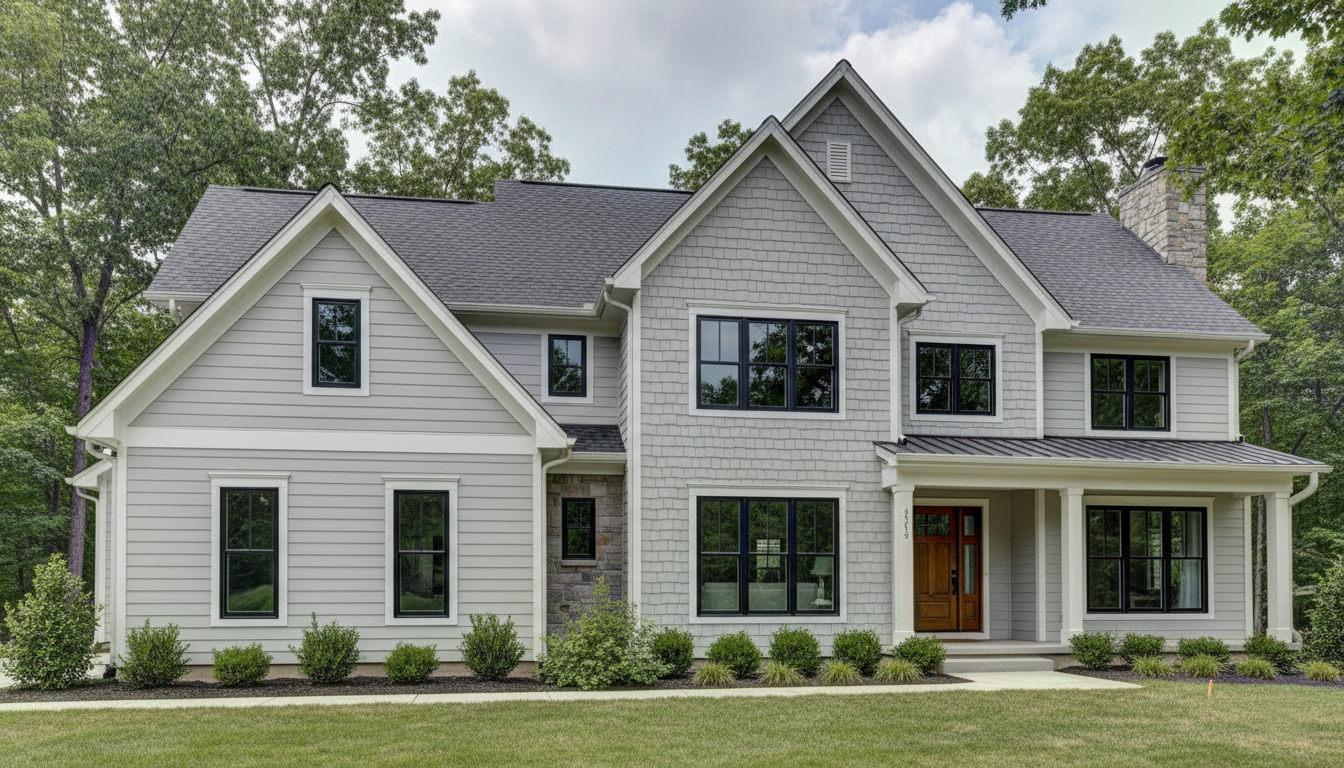
Absolutely. And it’s a smart design move when done right.
A popular approach is a dutch lap on the front facade for visual impact and a straight lap on the side and rear walls to manage costs. You can also combine either style with board and batten accents or shake shingles in the gable areas. Mixing textures gives your home a custom, architect-designed feel without a custom price tag.
|
Feature |
Dutch Lap |
Straight Lap |
|
Appearance |
Textured, dimensional |
Clean, minimal |
|
Shadow lines |
Yes |
No |
|
Best styles |
Craftsman, Victorian, farmhouse |
Colonial, ranch, contemporary |
|
Cost |
Slightly higher |
Standard |
|
Installation |
Requires more skill |
Simpler |
|
Maintenance |
Slightly more cleaning |
Easier to wash |
|
Durability |
Same (material-dependent) |
Same (material-dependent) |
Choose dutch lap if you want texture, depth, and old-world charm. Choose straight lap if you love clean lines and timeless simplicity. Neither option is objectively better. It comes down to your taste, your home’s architecture, and your budget.
Ready to see samples in person? Contact American Quality Remodeling at (609) 595-4900 for a free consultation. We’ll help you pick the perfect siding style and install it with the craftsmanship your home deserves.



Embark On Your Build With Us!
we will be in touch with you soon
