American Quality Remodeling is a licensed siding replacement company based in Burlington, NJ, serving homeowners across Burlington County and the surrounding area. We replace all major siding types — vinyl, fiber cement, engineered wood, wood shake, aluminum, and brick veneer — on residential and commercial properties. With 25 years of experience and 3,000+ completed projects across Burlington City, Burlington Township, and the neighboring river towns, our crews handle the full scope from permit to final walkthrough. Every replacement is backed by a written workmanship warranty.
Any Questions? Talk with an Expert
Signs Your Burlington Home Needs Siding Replacement
Replacement is the right call when damage covers more than 30% of the total exterior surface, when the siding is approaching or past its expected lifespan, or when the material is no longer performing adequately in Burlington’s climate. Repair makes sense for isolated damage. Below that threshold – and with functioning underlying structure – it doesn’t.
Widespread Cracking or Chipping
Freeze-thaw cycles here do cumulative damage across entire elevations, not isolated panels. When temperature swings crack a dozen sections simultaneously, patching becomes a losing battle – new cracks appear faster than repairs close the old ones. At that point, full replacement restores the envelope; piecemeal patching doesn’t.
Warping or Buckling Across Multiple Sections
Warped siding has detached from the structure it’s meant to protect. One buckled panel can be re-secured. Multiple buckled sections across a wall indicate a systemic failure – the siding is no longer bonded correctly, and the gaps created break the weather seal at too many points to address individually.
Moisture Penetration and Rot Behind the Siding
When moisture has reached the sheathing or framing, the conversation shifts. The visible siding may look repairable, but if the substrate is compromised, new panels installed over damaged sheathing will fail on the same timeline. We inspect both layers during assessment, and when the structure underneath is involved, replacement of the full system is the only durable fix.
Siding Past Its Expected Lifespan
Vinyl siding has a functional lifespan of 20-30 years. Fiber cement runs 30-50. Wood, 20-40, depending on maintenance history. Siding at the edge of those windows degrades faster than new material would – investing in repair on a 28-year-old vinyl installation typically delays replacement by months, not years.
Persistent High Energy Bills
Siding that has lost its integrity lets air move freely through the wall assembly. Drafts and temperature loss that register on your energy bills – without an obvious single breach – usually indicate systemic degradation across the cladding layer. Repair patches specific failures; it doesn’t restore the thermal performance of the system as a whole.
Frequent Repairs That Keep Recurring
If the same sections need attention every one to two seasons, the math shifts. The cumulative cost of recurring repairs, plus the disruption of repeated project scheduling, often exceeds the cost of replacement within three to four years. We’ll tell you when that crossover point is near.
Get in touch
to contact us
How Much Does Siding Replacement Cost in Burlington, NJ
For a standard Burlington home with 1,500-2,000 sq ft of exterior surface, full house siding replacement typically costs: vinyl – $8,000-$14,000; engineered wood – $11,000-$18,000; fiber cement – $14,000-$25,000; wood – $18,000-$30,000+. These ranges reflect current South Jersey labor and material costs, not national averages.
Cost Factor
Impact on Final Price
Material type
Fiber cement costs 2-3× more than vinyl installed
Exterior square footage
Linear relationship – more surface, higher cost
Number of stories
Second-floor work requires scaffolding setup
Old siding removal
Adds to scope; disposal fees vary
Structural repairs found
Sheathing or framing work billed separately
Season
Spring/fall scheduling can affect lead time
Wall exposure
Open and river-facing elevations need upgraded fasteners and sealant
What adds to the baseline siding replacement cost: rot discovered under old siding, insulation upgrade during the open-wall window, and municipal permit fees – which differ between Burlington City and Burlington Township and run $150-$500 on average. We account for all of these in the written estimate before work begins. No line items appear on the final invoice that weren’t approved first.
New siding is one of the highest-ROI exterior investments in the South Jersey residential market. Fiber cement and insulated vinyl both reduce heating and cooling loads meaningfully – homes in this climate see measurable energy savings when replacing degraded siding with properly insulated systems. For homeowners planning to sell, new siding consistently improves appraisal outcomes in Burlington.
Financing is available at 0% interest for 48 months on qualifying projects.
Siding Replacement Materials We Install in Burlington
The right replacement material depends on three variables: how exposed the property is, the home’s architectural profile, and the project budget. We install six siding types for replacement projects – each suited to different conditions.
Material
Lifespan
Burlington Climate Suitability
Maintenance
Installed Price (per sq ft)
Vinyl
20-30 yrs
Good
Low
$3-$7
Insulated Vinyl
20-30 yrs
Very Good
Low
$4-$9
Fiber Cement
30-50 yrs
Excellent
Low-Medium
$8-$13
Engineered Wood
20-30 yrs
Good
Medium
$5-$10
Wood
20-40 yrs
Fair
High
$10-$16
Aluminum
30-40 yrs
Good
Low
$4-$9
Vinyl vs. Fiber Cement for a Burlington Replacement
Vinyl comes in at $3-$7 per square foot installed. Fiber cement runs $8-$13. That gap is real, and for many Burlington homeowners it’s the deciding factor – but the price difference narrows considerably when you account for lifespan. Vinyl lasts 20-30 years. Fiber cement runs 30-50. On a per-year basis, the math is closer than the upfront numbers suggest.
The performance differences are harder to ignore. Vinyl melts under direct flame and offers moderate impact resistance. Fiber cement is non-combustible and up to five times thicker than vinyl – it takes hail hits that would crack or dent a vinyl panel outright. Fade resistance tells the same story: vinyl holds color reasonably well for two decades, then starts showing its age. Fiber cement with baked-on ColorPlus finish maintains color significantly longer, with far less visible degradation at the 20-year mark.
Burlington sits inland of the shore counties, which is why vinyl siding replacement remains the most common project we run here. Without salt-air exposure, vinyl performs closer to its rated lifespan, and the freeze-thaw cycle – not corrosion – is the stress that matters.
Fiber cement still earns its price on two types of Burlington property: homes on open or river-facing lots that take direct wind-driven rain, and houses with serious thermal loads where the wall assembly is being opened anyway. Insulated vinyl or fiber cement installed over continuous insulation board narrows the thermal performance gap between the two materials considerably.
Our Siding Replacement Process
Full replacement follows eight defined stages. Our own crews handle every step – we don’t subcontract siding installation work. Most projects are completed in 3-7 days, depending on the material and scope.
Step 1 – Free Consultation and Site Assessment
We walk the full exterior, assess current siding condition, probe for moisture, and evaluate the sheathing layer. Material options are discussed on-site. You receive our honest recommendation – including whether repair is actually sufficient – before any paperwork is signed.
Step 2 – Material Selection and Written Estimate
We narrow options to what works for your property’s exposure, HOA requirements if applicable, and project budget. You receive a written scope and cost estimate. Nothing proceeds without your approval.
Step 3 – Permit Application
Most full replacements in Burlington require a municipal permit. We pull the application, coordinate with the local building department, and schedule required inspections. You don’t manage that process.
Step 4 – Old Siding Removal
Existing panels are removed carefully to preserve the sheathing layer underneath. All removed material is hauled off site. No debris left behind.
Step 5 – Structural Inspection and Repairs
With the wall open, we inspect the framing, sheathing, and moisture barrier condition. Any rot, moisture damage, or structural issues are documented and repaired before new material goes up. This step is non-negotiable – new siding over a compromised structure fails on a compressed timeline.
Step 6 – Weather Barrier and Insulation Installation
House wrap is applied with tape-sealed overlaps at all seams, corners, and penetrations. If an insulation upgrade is part of the scope, continuous insulation board is installed at this stage before siding goes up.
Step 7 – Siding Installation
Panels, trim, corners, and flashing are installed to manufacturer specifications. Fastener selection reflects how exposed the wall is – upgraded corrosion-resistant hardware on open and river-facing elevations, standard spec on sheltered ones. All seams and penetrations are sealed for the local temperature range.
Step 8 – Final Inspection and Warranty Handoff
We walk through the completed project with you before the job is closed. You receive before-and-after photos, permit records, and written documentation of both manufacturer and workmanship warranties in one packet.
Vinyl siding replacement on a single-story home typically completes in 3-5 days. Fiber cement runs 5-7 days due to cutting and fastening requirements. Two-story projects add time for scaffolding setup and breakdown.
Siding Replacement Requirements in Burlington, New Jersey
Freeze-thaw cycling is the primary mechanical stress on siding systems here. When temperatures cross the freezing threshold repeatedly – rather than staying cold – they generate expansion and contraction cycles that fatigue caulk joints, loosen fastener seats, and crack panel profiles faster than sustained cold does. Sealants rated for moderate climates lose elasticity in this cycling pattern on a compressed schedule.
Exposure varies street by street in Burlington. A sheltered block in Burlington Township and an open lot facing the Delaware produce different failure timelines on identical materials. We use upgraded corrosion-resistant fasteners and higher-grade sealant at panel joints and penetrations on exposed elevations, and those properties also qualify for our extended workmanship warranty covering fastener corrosion and sealant failure.
Most full siding replacements in New Jersey require a municipal building permit. Some municipalities also impose insulation R-value minimums when the exterior wall assembly is opened. We handle permit applications as part of every replacement project and flag any local requirements that affect material selection before the scope is finalized.
The optimal installation window here is spring (April-June) and early fall (September-October). Most siding adhesives, caulks, and house wrap tapes require temperatures above 40°F to cure correctly. We schedule around that threshold in late fall and early spring – if conditions drop during a job, we pause rather than install materials outside their performance range.
Siding Replacement Warranty
Every replacement project from American Quality Remodeling is backed by two separate warranties: a workmanship warranty covering installation quality, and the manufacturer’s product warranty on the materials installed. Both are provided in writing at project completion.
Warranty Type
What It Covers
Workmanship warranty
Installation defects, leaks at panel joints, fastener failure, flashing and barrier failures
Manufacturer warranty
Material defects, premature fading, delamination, structural failure of product
For exposed and river-facing properties in Burlington, our workmanship warranty includes specific coverage for fastener corrosion and sealant failure at panel joints – failure modes that standard workmanship warranties typically exclude. These are the most common post-installation issues on walls that take direct wind-driven rain, and we cover them directly.
Two things void coverage: unauthorized modifications to installed panels after project completion, and painting over factory-applied finishes – specifically James Hardie ColorPlus product lines, which require the original baked-on finish to remain intact for the manufacturer’s warranty to stay active.
If hidden damage is discovered during removal – rotted sheathing, compromised framing, failed moisture barrier – work stops. We document what we found, walk you through the revised scope and cost, and wait for your approval before continuing.
Areas We Serve
Burlington is our base, and most replacement projects sit within a short drive: Burlington City, Burlington Township, Edgewater Park, Beverly, Delanco, Delran, Cinnaminson, Riverside, Willingboro, and Florence. Beyond that we cover the rest of Burlington County, plus Camden and Mercer counties and the neighboring Pennsylvania suburbs, where siding replacement for Philadelphia and Bucks County homeowners schedule runs through the same office. Material and fastener specs are set by how exposed your walls are, and permit requirements, including insulation R-value minimums, vary by municipality. Select your town below to see local siding service details.
Get a Free Siding Replacement Estimate in Burlington
A free estimate from American Quality Remodeling includes an on-site visit, full exterior assessment, material recommendations matched to your property’s location and exposure conditions, and a written cost breakdown. We deliver the written estimate the same day or within 24 hours of the inspection visit – with a direct repair vs. replacement recommendation included.
Call +1 609-595-4900, email info@americanqualityremodeling.com, or submit the contact form on this page. If you’ve been searching for a reliable siding replacement contractor in New Jersey, our team is available Monday through Friday, 8:30 AM to 5:30 PM, out of our Burlington office on US-130.
Our Latest
Creations
Discover the Innovation and Quality of Our Newest Releases
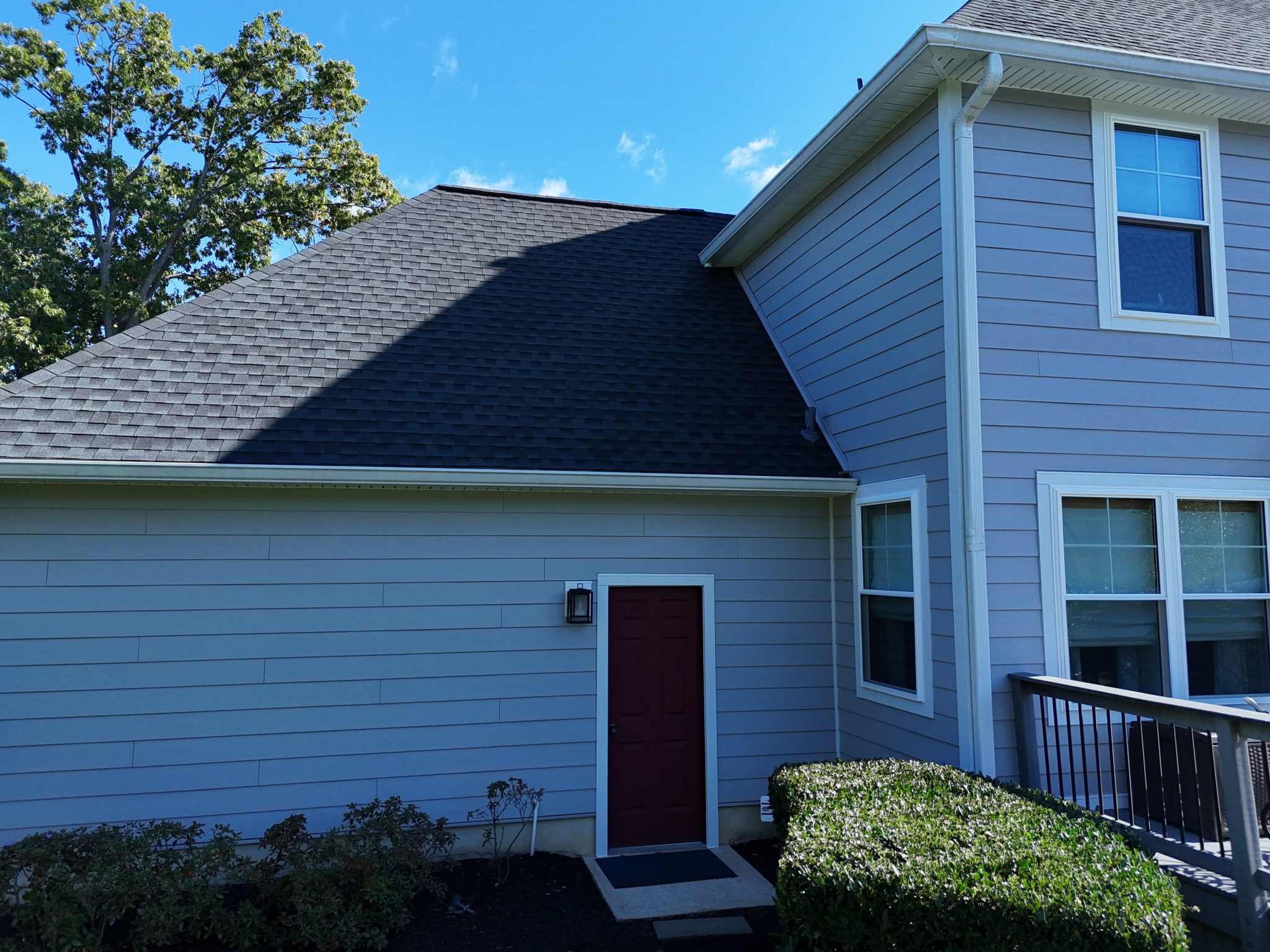
James Hardie Siding & Window Upgrade In Edgewater Park, NJ
Comprehensive exterior transformation combining premium James Hardie fiber cement siding with energy-efficient windows. Our integrated approach delivers a cohesive design that maximizes both aesthetic impact and functional performance, creating a home that's beautiful, comfortable, and built to last.
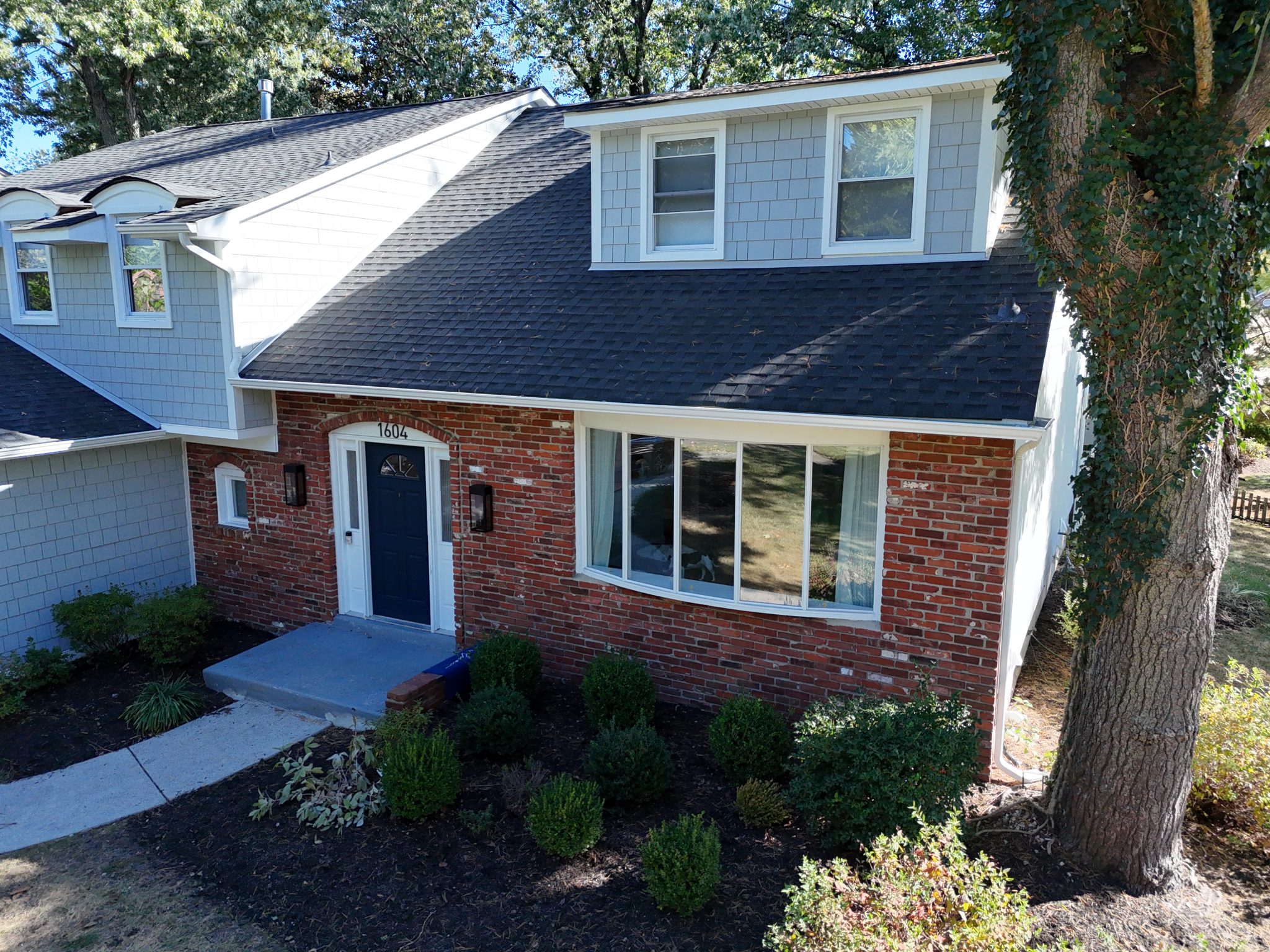
James Hardie Siding Installation In Cherry Hill Township, NJ
Complete exterior renewal featuring James Hardie fiber cement siding that delivers lasting beauty and superior protection. Our meticulous installation process ensures your home benefits from industry-leading durability, minimal maintenance requirements, and a fresh, modern appearance that enhances value and curb appeal.
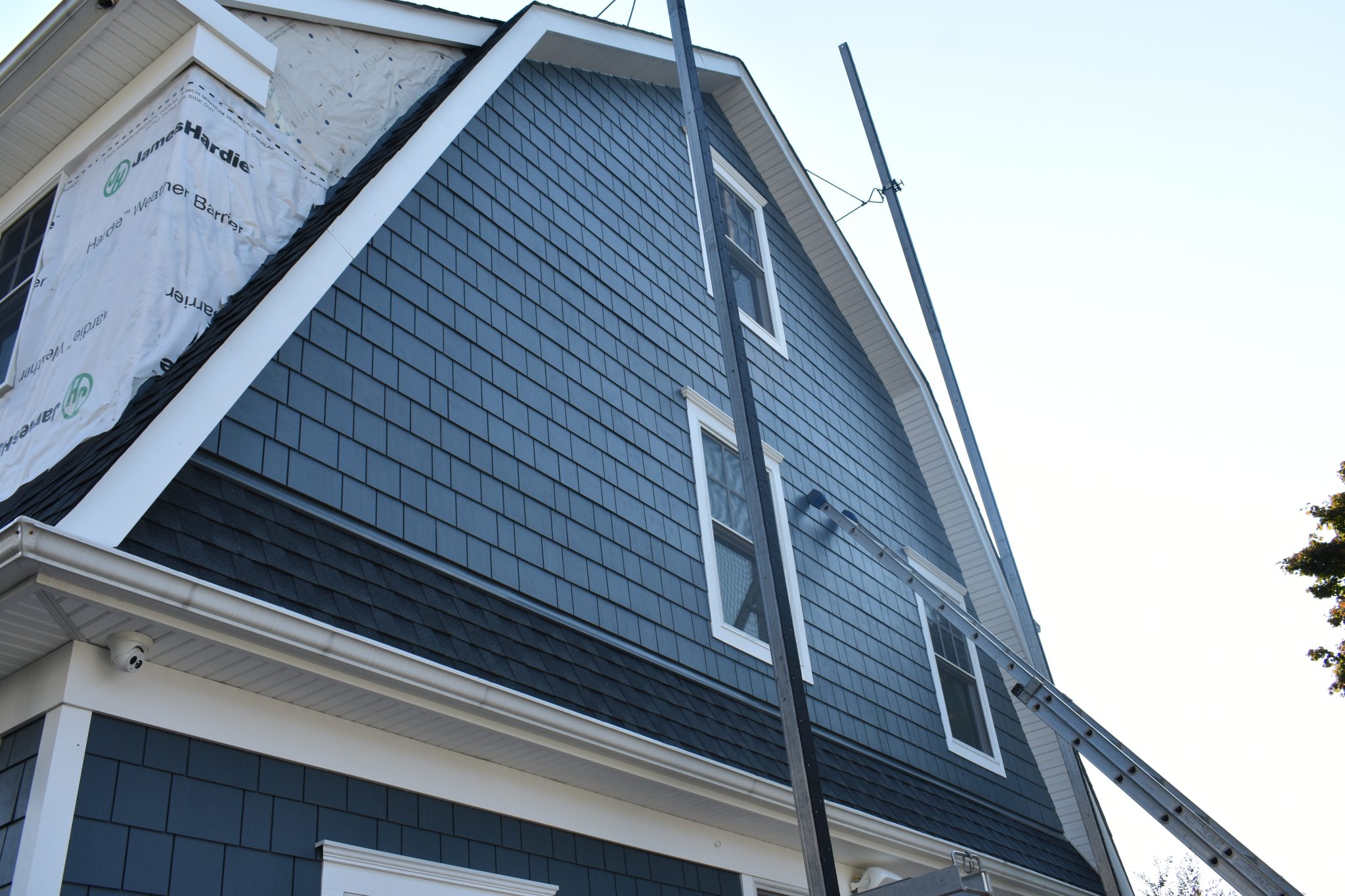
Classic coastal charm meets modern durability with premium James Hardie shake siding. Our expert installation delivers the timeless beauty of traditional wood shakes with the superior performance of fiber cement technology, providing maintenance-free protection that stands up to coastal weather conditions.
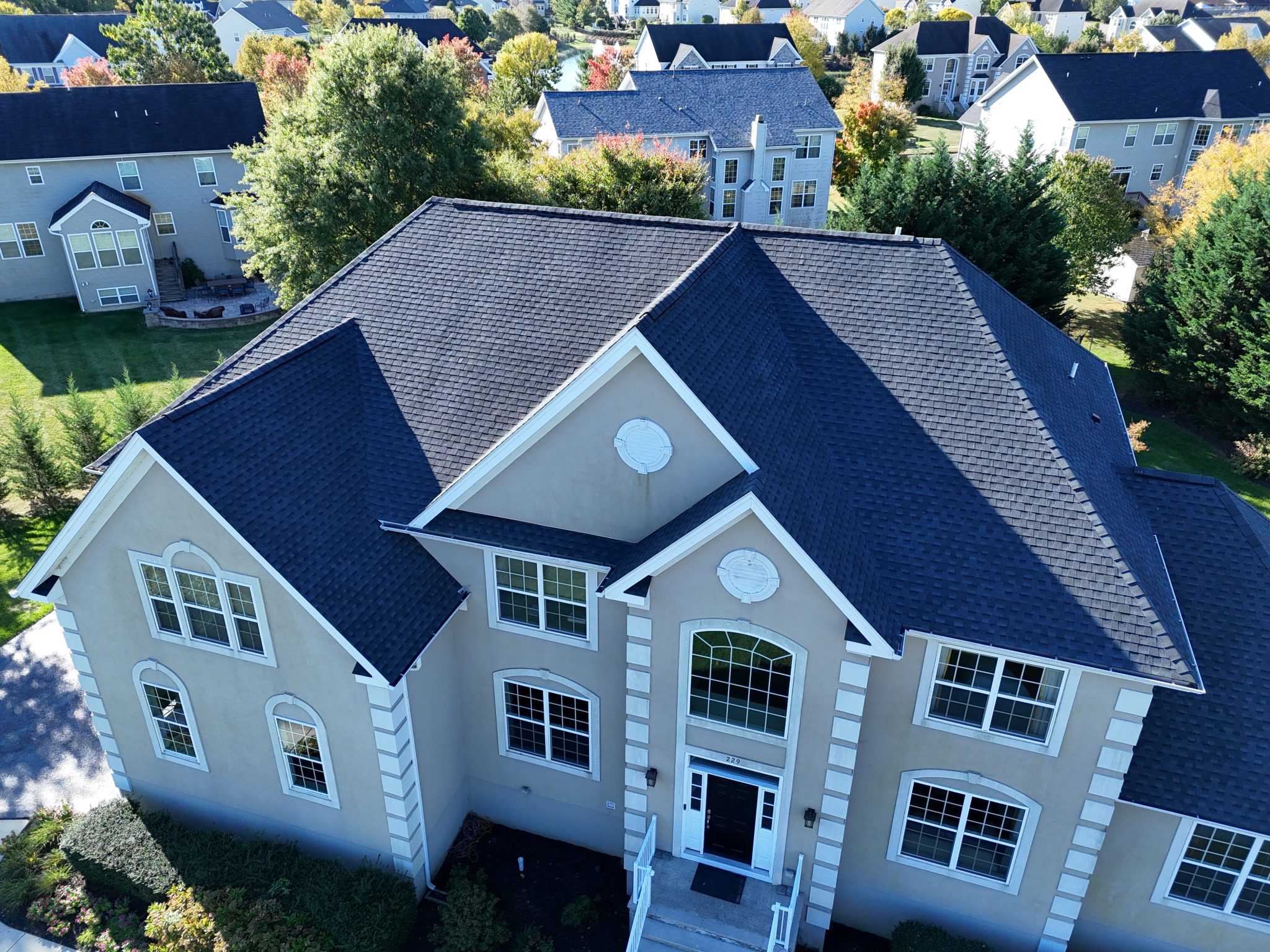
Superior roofing installation that combines aesthetic excellence with dependable performance. Our expert team delivers precision craftsmanship and premium materials, ensuring your home receives comprehensive protection while maintaining an elegant appearance that elevates your property's distinction.
Reliable roofing solutions that deliver lasting protection and peace of mind. Our skilled team installs quality roofing systems with meticulous attention to detail, ensuring your home stays safe and dry through every season while enhancing its overall appearance and value.
Complete Exterior Makeover In Lumberton Township, NJ
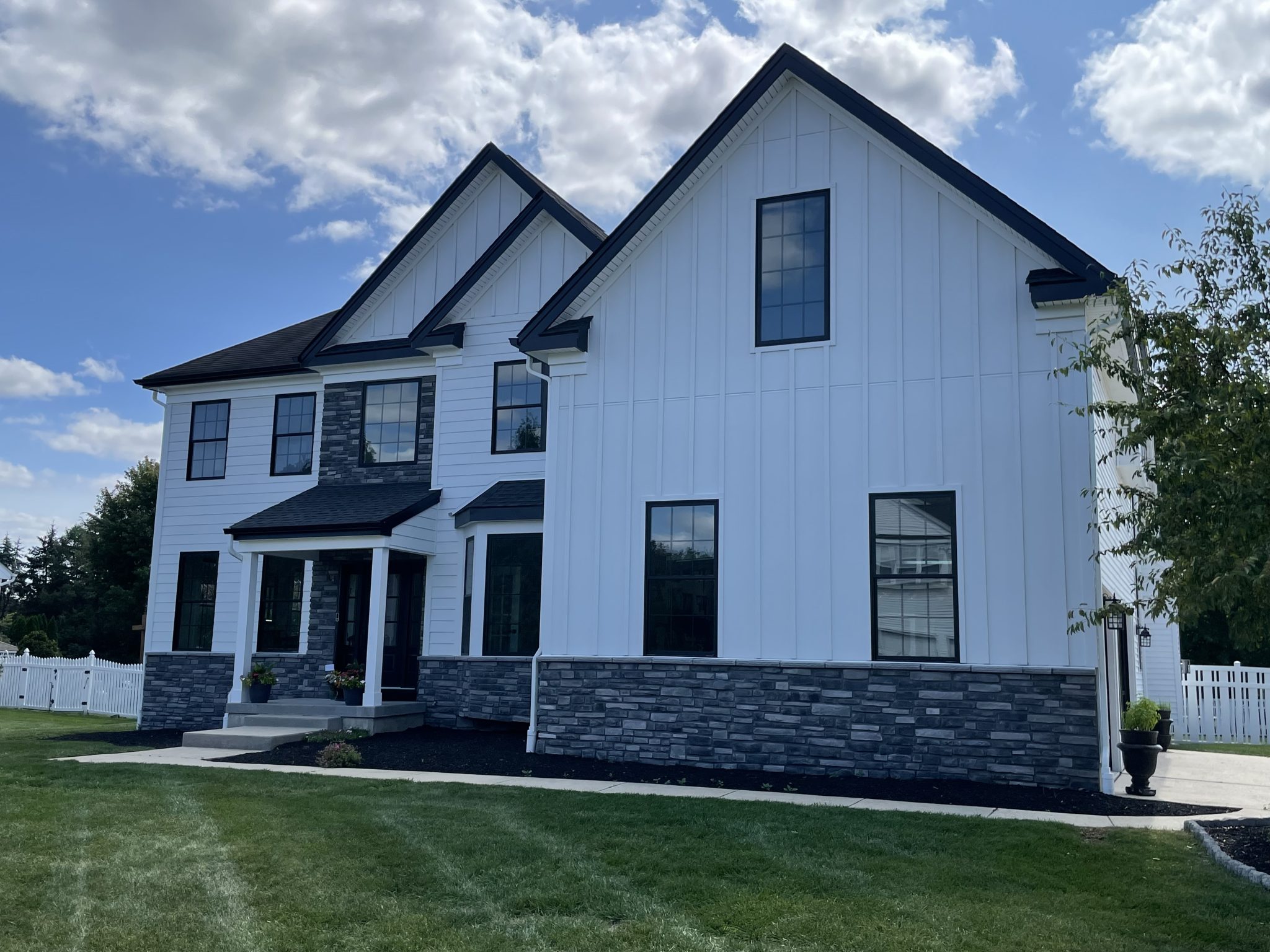
Full-scale exterior renovation featuring modern board and batten siding, energy-efficient windows, and stylish entry door installation. Our integrated approach ensures every element works harmoniously to create a striking contemporary aesthetic while maximizing protection, efficiency, and functionality for your home.
For a standard NJ home (1,500-2,000 sq ft exterior), full siding replacement runs: vinyl - $8,000-$14,000; engineered wood - $11,000-$18,000; fiber cement - $14,000-$25,000; wood - $18,000-$30,000+. Final cost depends on material type, number of stories, whether structural repairs are needed underneath, and your county location. Coastal counties typically add coastal-spec fasteners and sealant to the material cost.
Repair is appropriate when damage is localized - covering less than 30% of the exterior surface - and the existing material is mid-life and structurally sound. Replacement is the right call when damage is widespread, the siding is approaching its lifespan limit, or when moisture has reached the sheathing or framing underneath. We give you a direct recommendation after the site inspection.
Vinyl replacement on a single-story home runs 3-5 days. Fiber cement takes 5-7 days due to cutting and fastening requirements. Two-story projects add time for scaffolding setup and breakdown. Weather delays happen - we build buffer into every schedule and communicate changes in real time.
It depends on where in NJ you are. Coastal counties (Ocean, Monmouth, Atlantic, Cape May) - fiber cement is the clear performance leader in salt-air conditions. Inland NJ (Burlington, Camden, Mercer) - vinyl or engineered wood covers most budgets and performs well through the freeze-thaw cycle. Northern counties with hard winters - insulated vinyl or fiber cement with continuous insulation board for thermal performance.
New siding consistently improves both appraisal outcomes and market appeal in NJ's competitive real estate market. Fiber cement and insulated vinyl also reduce heating and cooling costs, which shows up in operating costs that buyers factor into offers. Updated exterior cladding is one of the more tangible curb appeal signals in NJ's suburban markets.
Most municipalities in NJ require a building permit for full siding replacement. Some towns add insulation R-value requirements when the wall assembly is opened. We pull permits as part of every replacement project and handle all coordination with local building departments. Unpermitted work surfaces during real estate transactions and can complicate or block a sale.
In some cases, yes - technically. We don't recommend it. Installing over existing siding adds weight to the wall assembly, traps any existing moisture underneath, and prevents inspection of the sheathing and framing layer before new material goes up. If there's rot or damage underneath, you've covered it rather than addressed it. We remove old siding on every replacement project.
With correct installation and maintenance, vinyl - 20-30 years; fiber cement - 30-50 years; engineered wood - 20-30 years; wood - 20-40 years, depending on maintenance; aluminum - 30-40 years. NJ's freeze-thaw cycling, humidity, and coastal salt air can compress those ranges if the installation isn't specified for local conditions. Materials installed with correct fasteners, sealants, and weather barriers perform at the high end of those ranges.
Optimize Your Construction Project with Tailored Financing: Our Expert Guidance Minimizes Risk and Maximizes Funding Efficiency for Your Success. Build Your Dreams Today!