Commercial Flat Roof Installation & Replacement Services in New Jersey
American Quality Remodeling operates as a commercial flat roofing company serving property owners and facility managers across New Jersey and southeastern Pennsylvania. Our commercial roofing services cover new installation, full system replacement, and repair work on low-slope and flat roof structures - retail buildings, office properties, warehouses, multi-unit residential, and light industrial facilities. Every project is handled by crews experienced specifically in commercial flat roofing systems, not residential contractors taking on occasional commercial work.
Types of Commercial Flat Roofing Systems We Install
Commercial flat roofing is not a single product category – it’s a range of distinct membrane and modified systems, each suited to different building types, budget ranges, and performance requirements. Selecting the right system for a specific property depends on roof size, drainage design, foot traffic exposure, energy priorities, and the building’s structural load capacity. We install all four major flat commercial roofing system types and help property owners understand the practical differences before committing to a material.
EPDM Commercial Roofing
EPDM (ethylene propylene diene monomer) is a single-ply rubber membrane that has been used on commercial flat roofs for decades. Its durability under UV exposure and temperature cycling makes it a practical choice for New Jersey properties, where roofs face significant thermal stress across seasons. EPDM is available in 45-mil and 60-mil thicknesses – heavier membranes offer better puncture resistance and are appropriate for roofs with maintenance foot traffic.
The material installs in large sheets that minimize seam count, reducing the number of potential water infiltration points. It’s compatible with most common insulation types and works well on roofs where drainage is managed through internal drains or scuppers. Service life on a properly installed EPDM system typically runs 20 to 30 years with routine maintenance.
TPO Flat Roof Systems
TPO (thermoplastic polyolefin) is currently one of the most widely specified single-ply membranes in commercial roofing. Its white reflective surface reduces heat absorption, which lowers cooling loads in buildings with significant roof-to-interior heat transfer – a meaningful consideration for warehouse and retail properties in New Jersey’s summer climate.
TPO seams are heat-welded rather than adhered or taped, producing a monolithic bond that performs better under thermal movement than adhesive-based systems. The membrane is available in 45-mil, 60-mil, and 80-mil options. Heavier gauges are appropriate for roofs with regular foot traffic or exposure to mechanical equipment installation and service activity.
PVC Commercial Roofing
PVC (polyvinyl chloride) roofing membranes share the heat-welded seam construction of TPO but offer superior chemical resistance – a relevant characteristic for restaurant facilities, food processing buildings, or any property where grease-laden exhaust or chemical exposure is a factor. PVC is also highly resistant to puncture and has a long track record on commercial installations where durability under harsh conditions is the priority.
The material costs more per square foot than TPO or EPDM, which reflects its enhanced performance characteristics. For the right application, the premium is justified by reduced repair frequency and longer intervals between major maintenance interventions.
Modified Bitumen Roofing
Modified bitumen is a multi-layer system that builds redundancy into the roof assembly – each layer contributes to the overall waterproofing and structural performance of the finished system. It’s a practical specification for buildings where a single-ply membrane’s dependence on seam integrity is a concern, or where the roof profile includes complex penetration patterns that make single-ply detailing more demanding.
Modified bitumen installs in two or three plies, depending on the system specification, and is available in torch-applied, cold-applied, and self-adhering configurations. The finished surface is typically granulated, providing UV protection without the need for separate coating maintenance. It’s a proven system for flat commercial roofing on older building stock common throughout central and southern New Jersey.
Get in touch
to contact us
Commercial Flat Roof Installation Process in NJ
Commercial flat roof installation in New Jersey follows a structured process that begins well before any material reaches the job site. The condition of the existing substrate, the building’s drainage design, local code requirements, and the property owner’s timeline all factor into how a project is scoped and executed. Skipping or compressing any phase of this process is where installation failures originate.
Pre-Installation Assessment
Every commercial roofing project starts with a comprehensive assessment of the existing roof assembly. We evaluate the condition of the current membrane or surface, the integrity of the insulation below it, the decking condition, and the performance of the drainage system. Core samples may be taken to assess moisture content in the insulation layer – wet insulation must be identified and replaced before a new membrane is applied, otherwise trapped moisture continues to degrade the assembly from within.
We also review the building’s structural load capacity against the proposed system weight, confirm flashing conditions at walls, curbs, and penetrations, and identify any areas of ponding water that indicate drainage corrections are needed as part of the scope.
Material Selection
Material selection follows the assessment and is informed by the building’s specific conditions, the owner’s performance priorities, and budget parameters. We present the appropriate system options for the property – not every system is right for every building – and explain the practical tradeoffs between cost, service life, energy performance, and maintenance requirements.
At this stage, we also finalize insulation specification, cover board requirements, fastening method (mechanically attached, fully adhered, or ballasted), and all accessory components: termination bar, flashing membrane, drain assemblies, and penetration details.
Installation Timeline
Commercial flat roof installation timelines vary based on roof size, system type, substrate preparation requirements, and weather windows. Single-ply membrane installation on a straightforward low-slope roof proceeds faster than a multi-ply modified bitumen system with complex penetration counts. We provide a realistic project schedule at the estimate stage and communicate any changes that affect the timeline before they impact the property owner’s operations.
For occupied commercial buildings, installation sequencing takes business operations into account. We coordinate access, staging, and daily work areas to minimize disruption, and we maintain weather-tight conditions on any section of roof that’s been opened at the end of each work day.
Quality Assurance
Quality control on commercial flat roofing happens throughout installation, not only at the end. Seam welds on TPO and PVC systems are tested with a probe immediately after welding and re-welded where any weakness is found. Membrane adhesion, fastener spacing, and flashing details are checked at each phase of the installation sequence. At project completion, we conduct a full roof inspection with the property owner or facilities manager before closing out the job.
Commercial Flat Roof Replacement Services
Commercial flat roof replacement becomes necessary when a membrane system reaches the end of its serviceable life or when cumulative damage and repair history make continued maintenance uneconomical. Replacement restores the building envelope to a fully warranted, properly performing state – and when planned proactively rather than reactively, it’s a significantly more manageable process than emergency replacement following a roof failure.
Signs You Need Roof Replacement
Several conditions indicate that commercial flat roof replacement is the appropriate course rather than additional repair work:
Membrane age at or beyond rated service life – a system that’s 20+ years old on a flat commercial roof is approaching the point where underlying insulation degradation and membrane brittleness make repair increasingly ineffective
Widespread or recurring ponding water – standing water that doesn’t drain within 48 hours of a rain event indicates drainage failure or membrane deflection that typically can’t be corrected without a full system evaluation
Multiple active leak points – when repairs address one location and new leaks appear elsewhere shortly after, the membrane has reached a condition where targeted fixes don’t hold
Saturated insulation – moisture trapped in the insulation layer below the membrane destroys the thermal performance of the roof assembly and accelerates structural deck deterioration; once saturation is widespread, replacement is the only effective solution
Visible membrane deterioration – blistering, splitting, shrinkage at seams, or surface erosion visible from a basic roof walk-through indicates the membrane is no longer performing as designed
Replacement vs. Repair Decision
The decision between commercial flat roof replacement and continued repair is primarily an economic one, but it requires accurate condition data to make the correct decision. A roof that needs three repairs in two years – each of which temporarily resolves one leak while others develop – is costing the property owner more in accumulated repair spend than a planned replacement would have. We provide honest assessments at the inspection stage, including a documented condition report that supports the decision-making process.
Partial replacement – removing and replacing a defined section of the roof rather than the full field – is sometimes appropriate when damage is localized and the remainder of the system is in sound condition. We evaluate this option where the roof’s condition data supports it.
Commercial Roof Replacement Timeline
Planning ahead for commercial flat roof replacement allows the project to be scheduled during lower-business-activity periods and reduces the operational disruption associated with a major roofing project. Lead time for material procurement varies by system type and project scale. We work with property owners to establish a realistic replacement timeline that accounts for building operations, weather seasonality, and permit requirements where applicable.
Emergency commercial flat roof replacement – when a system fails without warning – is a different scope. We respond to urgent situations in our service area and can mobilize crews for rapid assessment and weatherproofing while a full replacement plan is developed.
Benefits of Professional Commercial Flat Roofing in New Jersey
Properly specified and installed flat commercial roofing delivers measurable benefits that extend well beyond basic waterproofing. For New Jersey property owners, where building operating costs are high and weather demands are significant, the performance characteristics of the roofing system directly affect the building’s energy budget, maintenance schedule, and long-term asset value.
Energy Efficiency Advantages
Reflective membrane systems – TPO and PVC in particular – reduce the amount of solar heat absorbed through the roof surface. On commercial buildings with large, unshaded roof areas, this translates to a lower cooling load during New Jersey’s warm months and reduced mechanical system demand. Pairing a reflective membrane with adequate insulation thickness delivers a roof assembly with meaningful R-value improvement over aging systems with degraded insulation.
Long-term Cost Savings
A new flat commercial roofing system eliminates recurring repair costs associated with aging membranes. It also resets the warranty clock – both the manufacturer’s material warranty and the contractor’s installation warranty – giving property owners documented coverage rather than continued exposure to uncovered failures. Over a 20-to-25-year system life, the total cost of ownership on a properly installed commercial roof is lower than the alternative of repeated repairs on a deteriorating system.
Weather Resistance in NJ Climate
New Jersey’s climate creates specific stresses on commercial flat roofing: freeze-thaw cycling through winter, summer heat and UV exposure, nor’easter wind events, and periodic heavy rainfall that tests drainage capacity. System selection and installation detailing account for these conditions. Membrane thickness, fastening method, flashing design at parapets and penetrations, and drain capacity are all specified to perform under the actual conditions the roof will face – not generic industry minimums.
Commercial roofing decisions involve significant capital investment and long-term operational consequences. The contractor you select determines not just whether the installation is technically correct, but whether the project is managed professionally from assessment through completion.
Licensed and Insured
American Quality Remodeling carries the licensing and insurance required for commercial roofing work in New Jersey and Pennsylvania. General liability coverage and workers’ compensation apply to every project. For commercial property owners and facility managers, contractor insurance isn’t a formality – it’s a requirement that protects the property owner from liability exposure during the project and provides recourse if workmanship issues arise post-installation.
Local New Jersey Experience
Our commercial roofing work is concentrated in New Jersey and southeastern Pennsylvania, which means our crews are familiar with the building types, construction vintages, and permitting environments common to this market. We’ve worked on flat commercial roofs across Camden County, Burlington County, Mercer County, and the surrounding region – retail centers, industrial properties, multi-family buildings, and institutional facilities.
That regional focus means our project assessments reflect actual local conditions rather than generic assumptions, and our scheduling accounts for the weather patterns and permit timelines specific to the NJ market.
Commercial Project Portfolio
Our completed commercial roofing projects are documented and available for review. Property owners evaluating commercial roofing contractors near them in NJ can request references from comparable project types – building size, system type, and project complexity. We’re straightforward about the scope of work we take on and the results we deliver, and we’re comfortable with a thorough vetting process before any agreement is reached.
Other types of
Roofing
Explore our diverse materials for your home's perfect fit.
James Hardie Siding & Window Upgrade In Edgewater Park, NJ
Comprehensive exterior transformation combining premium James Hardie fiber cement siding with energy-efficient windows. Our integrated approach delivers a cohesive design that maximizes both aesthetic impact and functional performance, creating a home that's beautiful, comfortable, and built to last.
James Hardie Siding Installation In Cherry Hill Township, NJ
Complete exterior renewal featuring James Hardie fiber cement siding that delivers lasting beauty and superior protection. Our meticulous installation process ensures your home benefits from industry-leading durability, minimal maintenance requirements, and a fresh, modern appearance that enhances value and curb appeal.
Classic coastal charm meets modern durability with premium James Hardie shake siding. Our expert installation delivers the timeless beauty of traditional wood shakes with the superior performance of fiber cement technology, providing maintenance-free protection that stands up to coastal weather conditions.
Superior roofing installation that combines aesthetic excellence with dependable performance. Our expert team delivers precision craftsmanship and premium materials, ensuring your home receives comprehensive protection while maintaining an elegant appearance that elevates your property's distinction.
Reliable roofing solutions that deliver lasting protection and peace of mind. Our skilled team installs quality roofing systems with meticulous attention to detail, ensuring your home stays safe and dry through every season while enhancing its overall appearance and value.
Complete Exterior Makeover In Lumberton Township, NJ
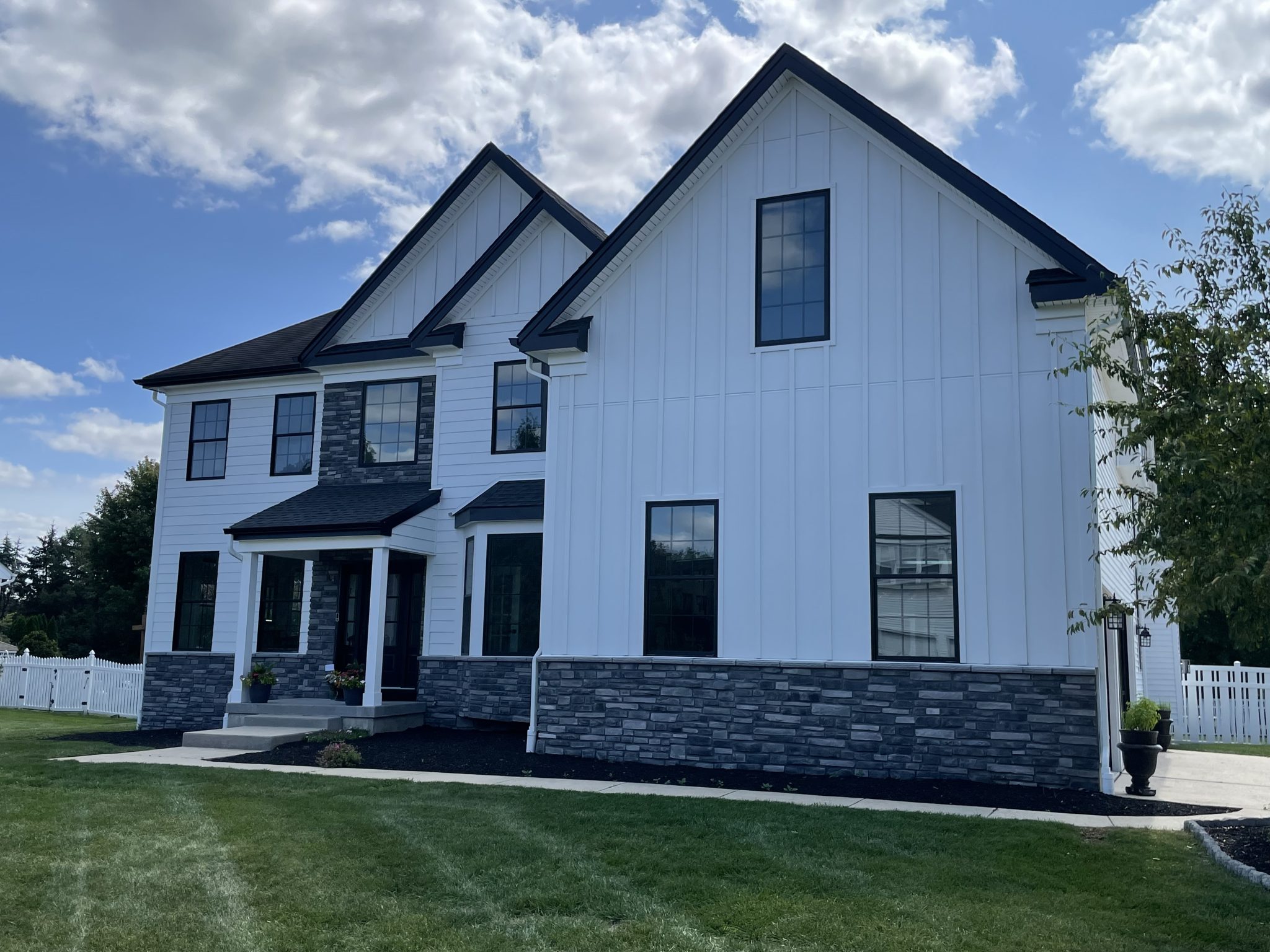
Full-scale exterior renovation featuring modern board and batten siding, energy-efficient windows, and stylish entry door installation. Our integrated approach ensures every element works harmoniously to create a striking contemporary aesthetic while maximizing protection, efficiency, and functionality for your home.
The most common types of flat commercial roofs include EPDM, TPO, PVC, Modified Bitumen and Built-Up Roofing (BUR). These alternatives have been made to suit various purposes as well as environmental conditions.
On average, flat commercial roofs tend to survive between 20-30 years depending on the materials used during construction, workmanship quality, and maintenance practices.
Pooling water, damaged or missing materials, significant wear and tear or persistent leaks are signs that may mean your flat commercial roof must be replaced.
In fact there is the possibility for repairing many problems associated with a flat roof for example those detected early enough. However extensive damages may require massive repairs or even total replacement.
This depends on the size of the roof, type of materials used and how complex it will be. Our prices are competitive and estimates provided for free help clients budget accordingly.