

10 min read
Feb 25, 2026

When hurricane-force winds hit, your roof is the first line of defense. It’s also the first thing to fail if it wasn’t built to handle the pressure. And while most homeowners focus on shingle type or material quality, the angle of your roof matters just as much. Sometimes more.
Roof pitch and shape directly determine how wind interacts with your home. The wrong combination turns your roof into a sail. The right one lets wind pass over with minimal resistance. This guide covers the science behind wind damage, the best roof pitch for hurricanes, and the roof shapes that give your home the greatest chance of surviving a major storm.
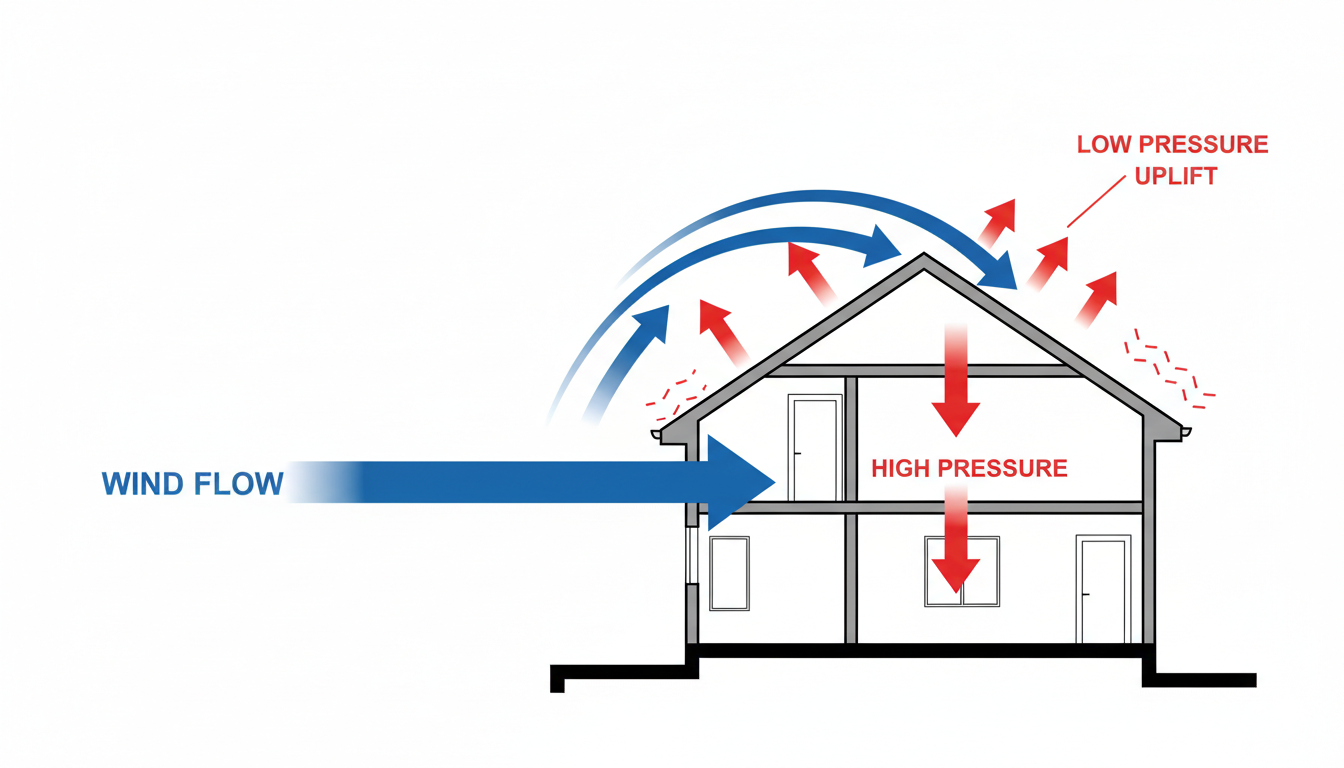
Most people imagine wind blowing shingles off. That happens, but the real danger runs deeper.
Hurricane winds create a phenomenon called wind uplift. As high-speed air moves over a roof, it generates low pressure above the surface. Meanwhile, pressure inside the attic stays higher, especially if wind forces its way in through a broken window or garage door. That pressure difference pushes the roof upward from the inside. Hard enough, and the entire structure lifts off the walls.
The most vulnerable spots are edges, eaves, and ridgelines. Corners take the worst beating because wind accelerates as it wraps around them. This is why hurricane roof damage so often starts at the perimeter and works inward, peeling the roof apart layer by layer.
Pitch plays a critical role in this equation. A roof that’s too steep acts like a wall standing in the wind’s path. It catches massive lateral force. A roof that’s too flat doesn’t deflect wind effectively and allows pressure to build on top. It also struggles to shed the torrential rain that hurricanes dump in a short period. Neither extreme is ideal. The answer lives somewhere in the middle.
Research points clearly to one number: 30 degrees, which translates to roughly a 7:12 pitch in standard roofing terms. That means the roof rises 7 inches for every 12 inches of horizontal run.
This isn’t just a rule of thumb. Dr. Rima Taher at the New Jersey Institute of Technology studied how different roof slopes perform under extreme wind loads. Her findings confirmed that a 30-degree angle offers the best balance between reducing uplift forces and maintaining structural stability. Wind testing by France’s CSTB (Centre Scientifique et Technique du Bâtiment) reached similar conclusions.
At 30 degrees, the roof is steep enough to channel rainwater quickly and prevent pooling. But it’s not so steep that it presents a large vertical surface to the wind. Pitches above 12:12 (45 degrees) start catching significantly more wind force. They also cost more to build and maintain. On the other end, low-slope roofs below 4:12 struggle with wind-driven rain infiltration and offer poor drainage during the kind of sustained downpours that come with tropical systems.
For homeowners in New Jersey and Pennsylvania, the best roof pitch for high winds doesn’t just apply to hurricanes. Nor’easters, severe thunderstorms, and microbursts all produce damaging gusts. A 30-degree pitch gives you reliable performance across the full range of extreme weather this region throws at you.
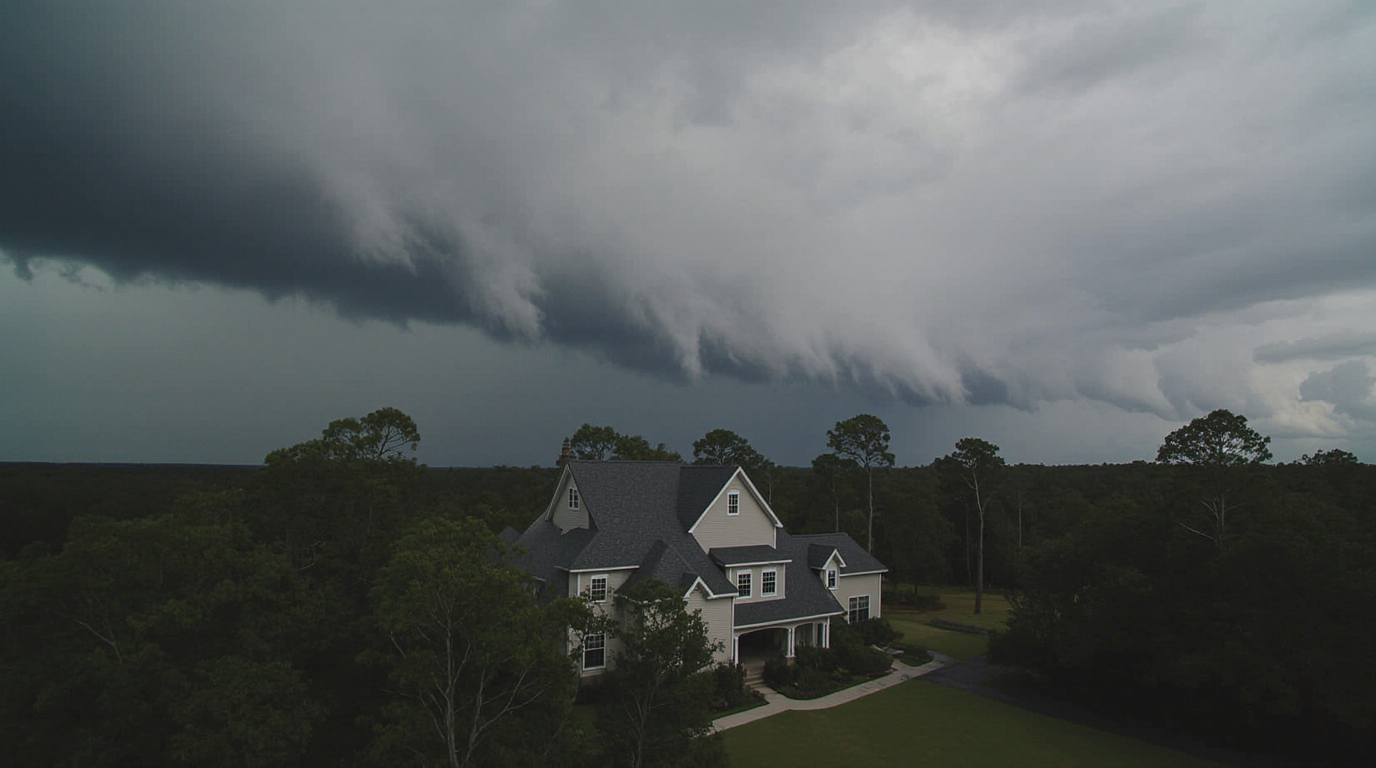
Pitch matters. But shape matters just as much. Two roofs with the same angle can perform very differently in a hurricane depending on their geometry.
If you could only pick one roof shape to survive a hurricane, this is it. A hip roof has four sloping sides with no flat vertical surfaces exposed to the wind. Every face is angled, which means wind pressure is distributed evenly across the entire structure instead of concentrating on a single wall.
Hip roofs also tend to have shorter overhangs, which reduces the leverage wind can use to pry the roof upward. Insurance companies in hurricane-prone states recognize this advantage. Many offer premium discounts for homes with hip roof construction.
From a pure aerodynamics standpoint, these are the ultimate wind-resistant shapes. Multiple angled faces break up the wind flow in every direction. There’s no single surface large enough to catch a concentrated gust. Wind essentially slides around the structure the way it moves around a lighthouse.
The problem is practicality. Hexagonal and octagonal roofs are rare in residential construction. They’re expensive to frame, difficult to shingle, and don’t fit most home floor plans. You’ll see them on gazebos and historic towers, not on the typical New Jersey colonial. Still, they prove an important principle: the more angles a roof has, the better it handles extreme wind.
This is the most common roof shape in America. Two sloping sides meet at a central ridge, forming a triangular wall (the gable end) on each side of the house. Simple to build. Affordable. And unfortunately, the worst performer in hurricanes.
Those flat gable ends are the problem. They act like sails catching wind head-on. Once pressure builds against that vertical surface, the entire roof structure can crack and collapse inward. Roof damage from hurricanes disproportionately affects gable-style homes for exactly this reason.
If your home already has a gable roof, don’t panic. Retrofitting with diagonal bracing on the gable end walls significantly improves resistance. Metal gable end braces bolt directly to the framing and prevent the wall from folding under wind pressure. It’s one of the most cost-effective upgrades you can make before storm season.
Flat roofs perform poorly in hurricanes on almost every front. Wind creates massive uplift across the entire surface because there’s no slope to redirect airflow. Water pools instead of draining. And the membrane systems used on flat roofs are more susceptible to peeling when the wind gets underneath an edge.
For commercial buildings, flat roofs are sometimes unavoidable. But for residential homes in storm-prone areas, a sloped roof with proper pitch will always outperform a flat design.
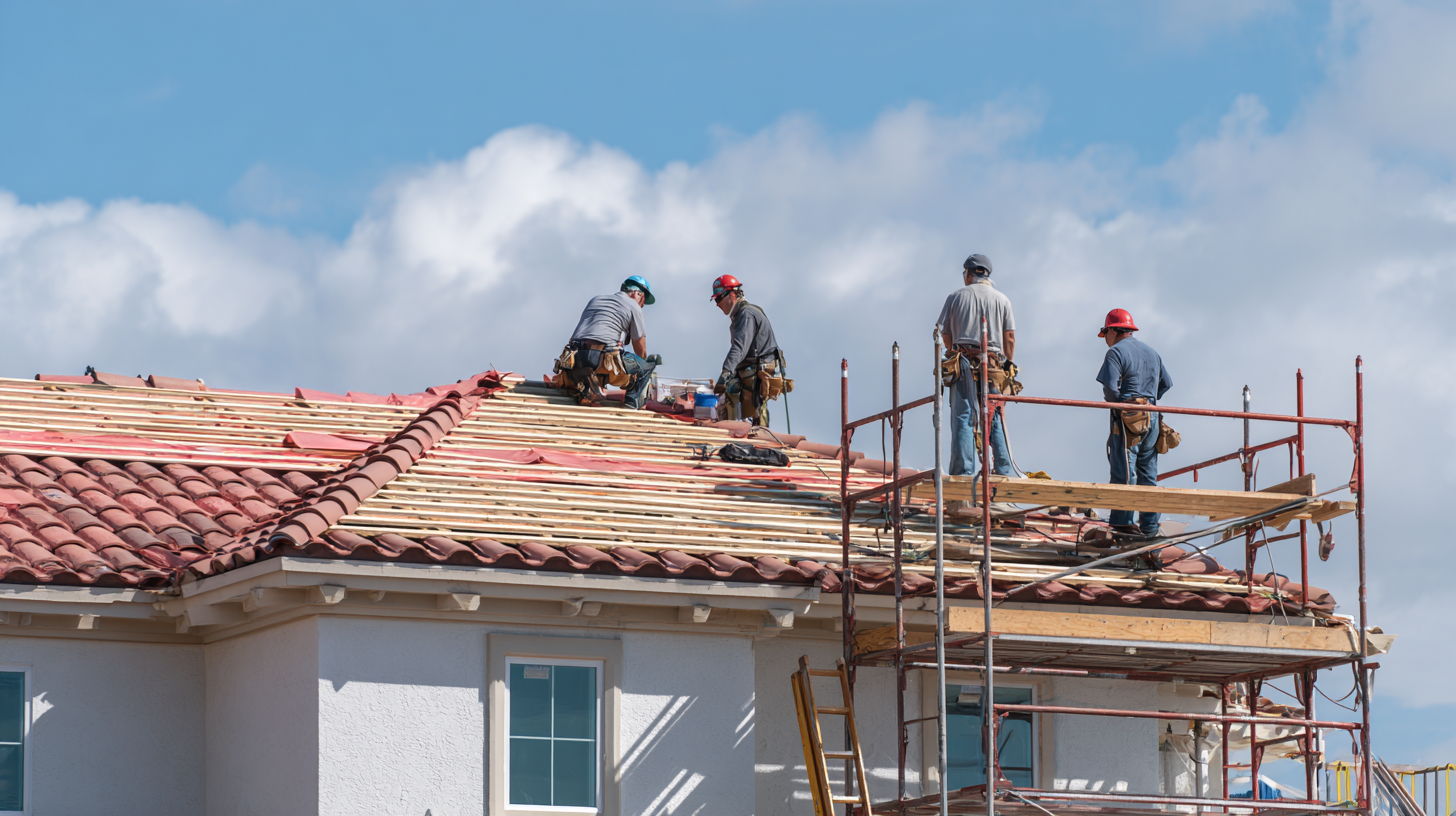
The best roof design for hurricanes combines the right pitch, the right shape, and proper reinforcement. Even a perfectly angled hip roof can fail if the connections between components are weak. Here’s where to focus your attention.
Hurricane straps and clips. These small metal connectors tie your roof framing to the walls below. Without them, the roof sits on top of the wall plates held mostly by gravity and a few toenailed fasteners. That’s not enough when uplift forces hit. Hurricane straps for roof reinforcement wrap around the truss or rafter and anchor into the wall stud with multiple nails. Clips mount to one side and offer less holding power but are easier to retrofit. Either option is a massive improvement over bare framing.
Roof decking. The plywood or OSB sheathing under your shingles needs to be properly fastened. Building codes in high-wind zones call for ring-shank nails, not staples. Nail spacing matters too. An 8d ring-shank nail every 6 inches along panel edges and 12 inches in the field creates a dramatically stronger deck than standard 12-inch spacing throughout.
Sealed roof underlayment. A peel-and-stick self-adhering membrane beneath the shingles acts as a secondary water barrier. If shingles blow off during a storm, this layer keeps rain out of the decking and attic. Sealed seams are critical. Felt paper alone won’t hold up under hurricane conditions.
Overhang length. Roof overhangs longer than 20 inches give wind more leverage to lift the edge. If you’re building new or replacing a roof, keeping soffits tight reduces this risk. Existing overhangs can be reinforced with additional framing and metal bracing.
Reinforcing points of entry. Your roof doesn’t exist in isolation. A garage door that blows in pressurizes the entire house and can blow the roof off from the inside. Impact-rated windows, reinforced garage doors, and sealed attic vents all reduce the chance of sudden internal pressurization. Hurricane clips for roof connections won’t save you if pressure builds unchecked inside the home.
At American Quality Remodeling, we’ve installed and repaired roofs across New Jersey and Pennsylvania for over two decades. We understand the weather patterns this region faces and build every project to handle them. If you’re concerned about your roof’s ability to withstand high winds, call us at (609) 595-4900 for a free inspection and honest assessment. Your roof should protect your family, not keep you up at night during every storm warning.



Embark On Your Build With Us!
we will be in touch with you soon
