
6 min read
Jun 23, 2026
Dutch lap vs. straight lap siding: learn the real differences in curb appeal, price, and performance. See which option works best for your home’s style and budget.

Dutch lap and straight lap siding differ in one detail. A Dutch lap board has a concave curve cut into its top edge, which creates a deep shadow line under each course. A straight lap board, also called clapboard or traditional lap, has a flat face. Both are available in vinyl and wood, cost approximately the same in vinyl and protect the exterior equally well. Below are the definitions, a side-by-side table, the practical differences and a simple way to choose between them.
Lap siding is any exterior cladding made of horizontal boards installed so that each row overlaps the one below it. The overlap directs rainwater away from the wall and creates the horizontal lines visible on most American houses. The plainest version, straight lap, uses boards with a flat face, and the only shadow comes from the thin edge where one course sits over the next.
Contractors and manufacturers also call it clapboard, traditional lap or bevel siding. According to siding manufacturer ProVia, clapboard came into use in America during the 17th century, when sawn wood boards replaced log walls. The flat profile pairs easily with almost any trim, color or accent material, which keeps it the default choice on many replacement projects.
Dutch lap siding uses the same overlapping layout, but the top of each board is cut with a concave curve that steps down into the lap. That recess catches light differently from the flat surface below it, so every course carries a darker, wider shadow line than straight lap. Viewed from the street, a Dutch lap wall appears more textured and more deliberately crafted.
The profile dates back to wood siding, when carpenters planed the curve into each board by hand and the extra labor made it the more expensive option. The name is usually traced to Dutch and German settlers, and some suppliers still call it German siding or cove lap. Today most Dutch lap on houses is vinyl siding, where the curve is molded into the panel and adds little to the production cost.
The two profiles share the same installation method, the same range of lifespans and most of the same materials. They differ in appearance, installation effort and cleaning, and the table below sums up each point.
|
Feature |
Dutch Lap |
Straight Lap (Clapboard) |
|
Board face |
Concave curve at the top of each course |
Flat |
|
Shadow line |
Deep and wide |
Thin |
|
Look from the street |
Textured, carved |
Clean, even |
|
Vinyl material cost (Angi) |
$2 – $7 per sq. ft. |
$3 – $6 per sq. ft. |
|
Installation |
Curves must line up at every seam |
Faster and more forgiving |
|
Cleaning |
Dirt collects in the groove |
Rinses off faster |
|
Fiber cement options |
Hard to find |
Widely available |
|
Lifespan |
Set by the material |
Set by the material |
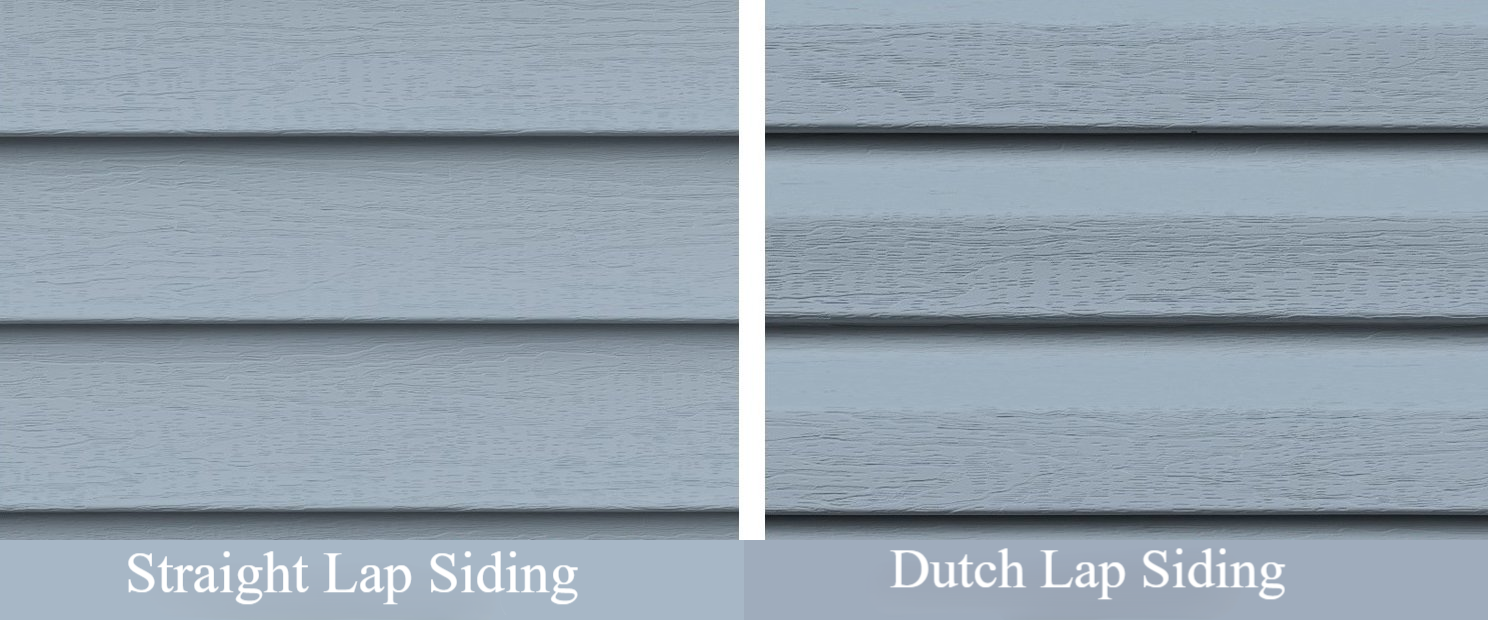
Profile choice affects how the wall looks and how the crew installs it. Protection from weather stays the same with either profile. Here is a detailed comparison of each characteristic.
Homeowners usually select Dutch lap for its deeper shadow. It shows most on light colors such as white, cream and pale gray, where the dark band under each course contrasts with the face of the board. On dark colors the effect fades, and from a distance the two profiles look much closer to each other.
Straight lap produces a flatter, more uniform wall. It allows trim, shutters, stone accents or a saturated color to carry the design, which explains its popularity on modern and minimalist exteriors.
In vinyl, the profile barely moves the price. Angi lists Dutch lap vinyl at $2 to $7 per square foot for material and vinyl clapboard at $3 to $6, so the two ranges overlap almost completely. Where Dutch lap does cost more, the difference usually comes from installation time, since the curves take more care to align.
The material influences the final price far more than the profile does. Moving from vinyl to fiber cement or wood changes a siding budget by more than any switch between Dutch lap and straight lap within the same material.
Straight lap panels install quickly because there is no decorative curve to match at seams and corners. Dutch lap needs that curve to line up at every overlap joint, window trim and corner post. Otherwise the shadow line breaks, and the mismatch shows from the street. Experienced installers handle both profiles, although Dutch lap leaves considerably less room for error. If you are planning siding installation, ask the crew how they will align the Dutch lap curve at corners and window trim before work starts.
Both profiles need identical basic maintenance: an annual wash with a garden hose or a low-pressure washer, plus an inspection for loose panels after major storms. The groove on Dutch lap holds more dust, pollen and mildew, especially on shaded walls. It may need a soft brush where a straight lap wall would rinse clean.
Weather resistance comes from the material and the quality of installation, and the profile has little effect on it. Vinyl siding typically lasts 20 to 40 years, fiber cement can last 50 years or more, and wood lasts as long as its paint and sealant are maintained. Our guide on how long vinyl siding lasts covers the factors that shorten or extend that range.
Profile availability does differ by material. Vinyl and wood siding both come in Dutch lap and straight lap. Fiber cement is harder to find with a Dutch lap face. James Hardie’s HardiePlank line lists Select Cedarmill, Smooth, Beaded Cedarmill and Beaded Smooth profiles, and none of them is a Dutch lap. If you want fiber cement, plan on a straight or beaded profile, or choose Dutch lap in vinyl or wood.
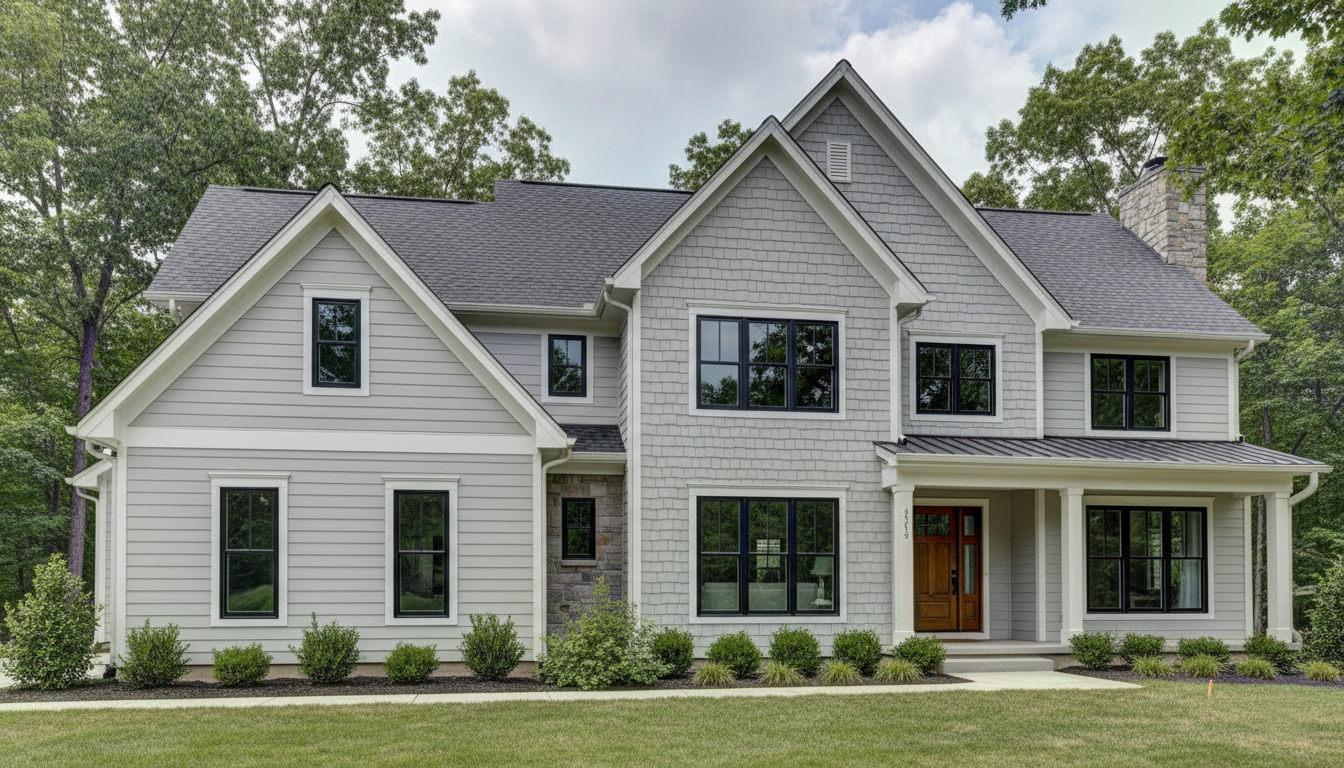
Yes, and combining profiles is a popular way to add architectural detail without changing the entire exterior. One approach puts Dutch lap on the front elevation, where its shadow lines are seen most, and straight lap on the sides and rear. Another keeps one profile on the main walls and switches the gables to shake or board and batten.
Combining works best when both profiles come from the same product line and color, so the panels share identical thickness and finish. Put the transition at a natural break, such as a corner, a floor line or a band board, so the change in profile looks intentional.
Begin with the architecture. Manufacturers do not agree on which profile suits which style. ProVia, for example, recommends Dutch lap for colonial and Victorian homes and straight lap for modern and Craftsman designs. A more practical test is the amount of detail. A facade with brackets, gables, porch columns and decorative trim can carry the deeper shadow of Dutch lap. A simple house or a modern design usually looks cleaner in straight lap.
Next, consider color. Choose Dutch lap if you plan a light color and want the texture to show, because a dark color hides most of the effect. Budget comes last, since in vinyl the price difference is minimal and in fiber cement the available profiles largely decide for you.
For homes in New Jersey or Pennsylvania, our siding team can bring samples of both profiles to compare against your existing trim and roof.
Dutch lap requires more careful installation, because the curve has to align at every seam and corner. The groove also accumulates dirt and mildew faster than a flat board. Fiber cement options are limited, and on dark colors the shadow line becomes much less visible.
In vinyl, only slightly or not at all. Angi lists Dutch lap vinyl at $2 to $7 per square foot for material and clapboard at $3 to $6. Any premium typically comes from the additional installation time required to align the curves.
Yes, in everyday usage both terms describe the same flat, overlapping board. Manufacturers and contractors also call it traditional lap or bevel siding. Dutch lap is a variation of the same lap layout, with a concave curve cut into the top of each board.
Double 4 is a panel format that applies to either profile. A double 4 vinyl panel has two 4-inch boards molded into a single piece, and manufacturers produce it in both clapboard and Dutch lap versions. You can purchase double 4 clapboard or double 4 Dutch lap.


Embark On Your Build With Us!
we will be in touch with you soon
