
6 min read
Jun 23, 2026
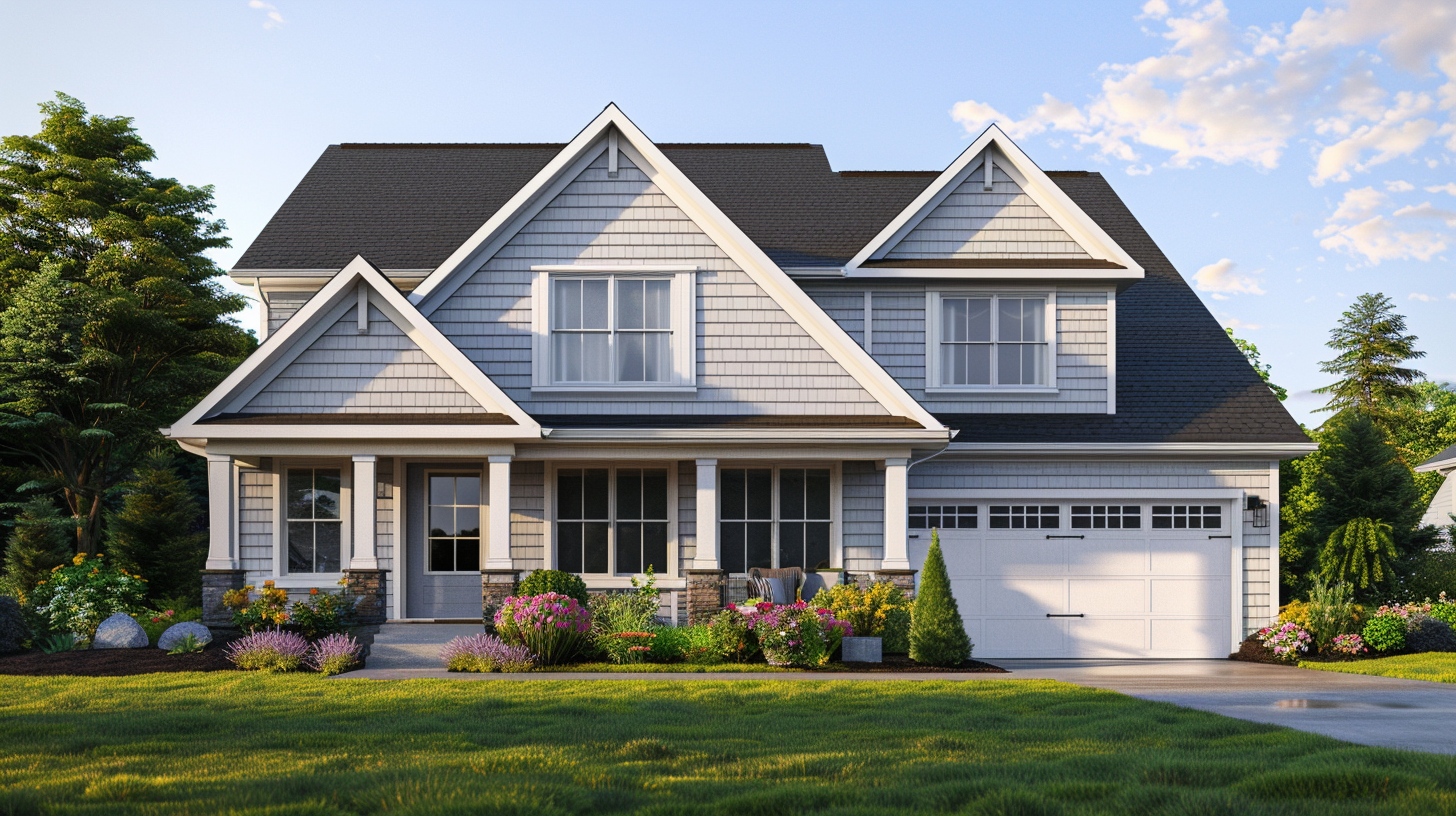
Vinyl siding typically lasts 20 to 40 years. High-quality panels with proper installation and routine care often reach 40 to 50 years, while builder-grade vinyl in harsh climates without maintenance may need replacement in 15 to 20. The average homeowner sees roughly 30 years of service. Manufacturer warranties range from 20 years up to a limited lifetime, and the five factors that most affect the actual number are panel quality, climate, installation, color choice, and maintenance.
The 20-to-40-year range is wide because vinyl siding’s real-world lifespan depends on a stack of variables that rarely line up the same way on two different homes. The upper end – 40 years and beyond – requires three conditions at once: premium panel thickness, professional installation, and a moderate climate. The lower end – 15 to 20 years – is what happens when low-grade vinyl is exposed to intense UV, freeze-thaw cycles, or storm damage, and the homeowner does no preventive maintenance.
For most homeowners, 30 years is a realistic planning number. That’s roughly the service life of a mid-grade vinyl product installed correctly on a home in a typical North American climate, assuming the owner cleans and inspects the siding periodically.
Getting to 40 to 50 years requires a deliberate combination: premium vinyl with panel thickness in the .046″ to .055″ range, installation by a contractor who leaves proper room for thermal expansion and flashes penetrations correctly, and an owner who performs annual cleaning and prompt repairs. This combination is less common than it should be, which is why most vinyl siding hits the middle of the range rather than the top.
Dropping into the 15-to-20-year zone usually involves builder-grade vinyl around .040″ thick installed on a new-construction home, exposed to strong sun or unprotected wind exposure, with no maintenance over the home’s first two decades. Fading, warping, and brittle cracking show up early and compound faster than owners expect.
Warranty length is often confused with lifespan, but they’re not the same thing. A “limited lifetime warranty” usually means coverage is tied to the original owner, covers manufacturing defects, and is pro-rated over time. Fading beyond a specified threshold, impact damage, and installation errors are typically excluded. A warranty certificate tells you what the manufacturer will help replace, not how long the siding will actually last on your wall.
In New Jersey and Pennsylvania, vinyl siding typically lasts 25 to 35 years – roughly five years short of the theoretical maximum. The shortfall comes from a specific combination of Mid-Atlantic climate stressors: freeze-thaw cycles, humid summers, nor’easter wind events, and salt air along the Jersey Shore.
Freeze-thaw cycles are the biggest factor. Winter temperatures in NJ and PA routinely swing between the low 20s°F and the 40s°F within a single week, sometimes within a single day. That cycling makes vinyl brittle faster than stable cold climates do, and it shortens panel life by roughly 3 to 5 years on homes with southern and western exposures.
Humid summers add a second problem. Relative humidity in the 70-90% range during July and August creates ideal conditions for mildew and algae growth, especially on shaded north-facing walls or behind overgrown shrubs. The mildew itself doesn’t destroy the panels, but homeowners often damage their siding trying to remove it with pressure washers or harsh chemicals.
Nor’easter storms are the third stressor. Wind-driven rain pushes water into siding laps, up under trim, and behind improperly flashed penetrations. Hail impact from summer thunderstorms is the single most common cause of premature replacement in the region, particularly on older, thinner panels.
On the Jersey Shore and other coastal stretches, salt air adds a fourth variable. Salt accelerates corrosion of nails, screws, and fasteners behind the siding, and it degrades caulking seals at windows and doors. That doesn’t affect the vinyl itself, but it shortens the life of the weatherproofing system around it.
For Mid-Atlantic homes, a few choices at installation meaningfully push lifespan back toward the 35-year mark:
Beyond climate, siding lifespan also depends on how the rest of the home’s exterior performs. AQR serves areas across both states where these factors vary substantially between Camden County and coastal Ocean County, or between Bucks County and Montgomery County.
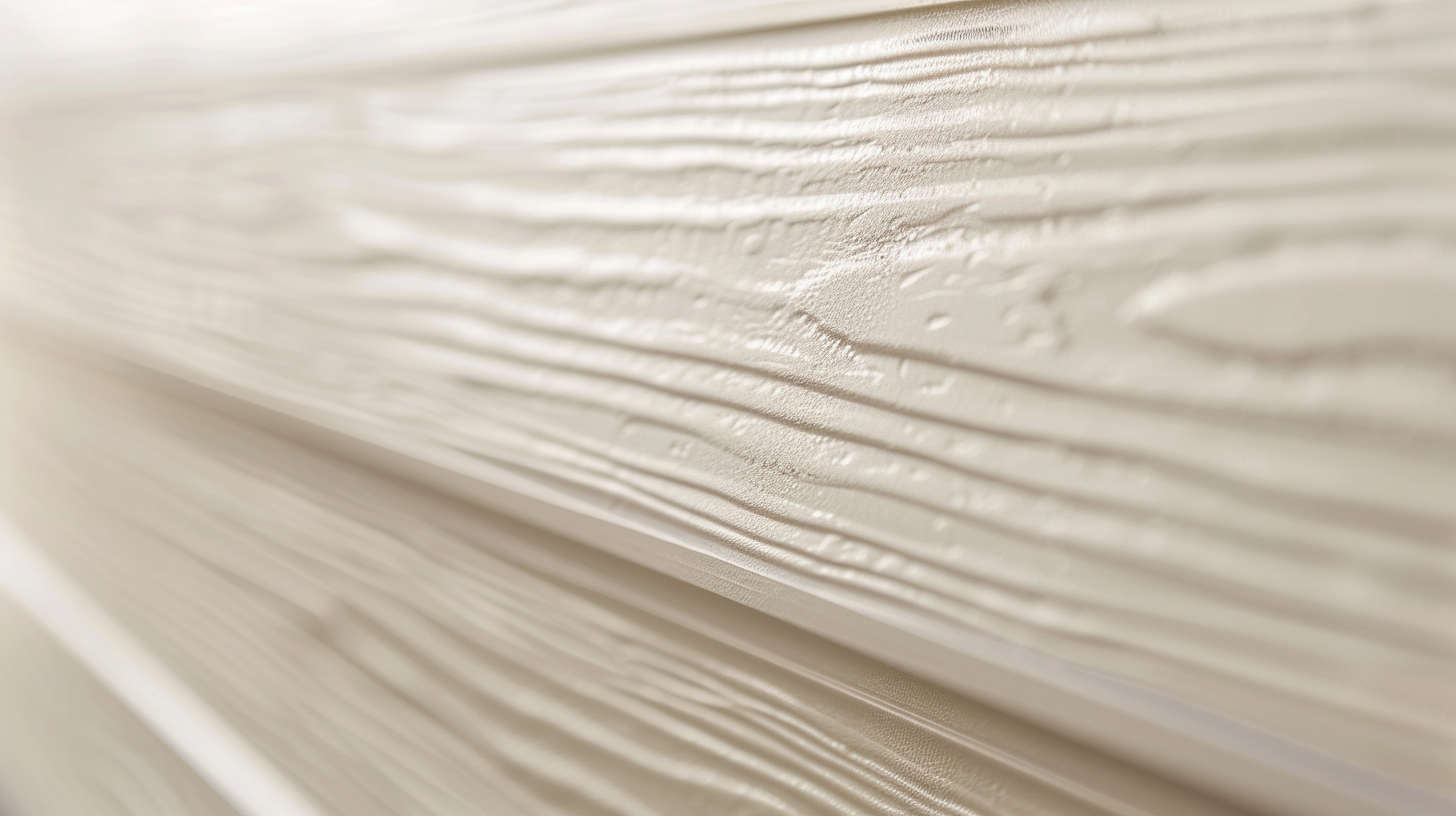
Six factors determine whether vinyl siding reaches the top or the bottom of its range: panel quality, installation, climate, color choice, wall orientation, and maintenance habits. No single factor determines the outcome – lifespan is the compound result of how all six stack on a given home.
Panel thickness is the single clearest predictor of vinyl siding durability. Thickness is measured in thousandths of an inch and typically falls into three classes: builder-grade around .040″, standard around .044″, and premium in the .046″ to .055″ range.
Thicker panels resist impact, warping, and thermal deformation better than thinner ones. A .055″ premium panel can absorb a baseball strike that would crack a .040″ builder panel. Thicker panels also hold their shape through decades of expansion and contraction cycles without buckling.
Better vinyl lines also contain titanium dioxide as a pigment additive. Titanium dioxide blocks UV penetration, which is the main driver of fading and surface embrittlement. Premium panels with higher titanium dioxide content hold their color 5 to 10 years longer than budget panels without it.
Installation errors can cut vinyl siding’s lifespan by 30 to 50%, regardless of panel quality. The three most common errors are nailing too tight, nailing too loose, and failing to install the water-resistive barrier (WRB) correctly behind the siding.
Vinyl siding is designed to move. Each panel expands and contracts roughly half an inch across its length as temperatures swing. Nails driven tight pin the panel and force it to crack or buckle when it can’t move freely. Nails driven too loose leave panels rattling in the wind, which eventually tears the nailing hem.
The WRB behind the siding is what actually keeps water out of the wall. If the WRB is torn, improperly lapped, or missing around windows and doors, water gets in regardless of how good the vinyl is. The siding fails not because it wore out but because the wall behind it rotted first.
Climate affects every vinyl siding installation, but the specific stressor varies by region. Five distinct climate factors degrade vinyl:
Homes in moderate climates – much of the Pacific Northwest, coastal California, the upper South – see the longest lifespans simply because they experience less of any single stressor.
Dark colors shorten the lifespan of vinyl siding. Navy, black, forest green, and dark brown absorb significantly more UV and heat than light colors, which accelerates fading and can cause thermal warping on sun-exposed walls.
The difference isn’t trivial. A dark-colored wall on a south-facing elevation may reach surface temperatures 20-30°F higher than an adjacent light-colored wall. That extra heat stresses the panel fastening and the resin itself.
Newer premium lines use advanced pigments that reduce – but don’t eliminate – the dark-color penalty. On average, light and medium colors still outlast dark colors by 5 to 10 years under equal conditions.
South- and west-facing walls age faster than north- and east-facing walls on the same house. Those elevations receive more daily UV hours and absorb more heat, which accelerates fading, brittleness, and thermal stress.
North-facing walls face the opposite problem. They stay cooler and damper, which makes them more prone to mold, mildew, and algae growth. The panels themselves hold up well, but they look discolored sooner.
Homeowners often see this pattern clearly on a single home: the south side fades 20 years in, while the north side looks fine but has green algae streaks. Both are end-of-life signals, for different reasons.
Owners who perform annual inspections and cleaning extend their vinyl siding’s service life by 10 to 15 years compared to owners who do nothing. The habits that matter are small and consistent, not expensive or technical.
Annual washing removes dirt, pollen, and mildew before they stain the surface. Prompt repair of loose panels prevents wind-driven water from reaching the WRB. Clearing debris from behind shutters, from siding channels, and around window trim prevents moisture pockets. Replacing cracked caulk around penetrations keeps the wall dry.
The gap between a maintained and an ignored vinyl siding installation is larger than most homeowners realize. The same .044″ panel in the same climate can reach 35 years on a maintained home or fail at 20 on an ignored one.
Vinyl siding sits in the middle of the siding lifespan range, but it leads in cost-to-longevity ratio. Fiber cement and brick live longer, but they cost substantially more upfront. Wood siding matches vinyl’s lifespan only with constant upkeep. Aluminum performs similarly to vinyl but at a higher price point.
|
Material |
Lifespan |
Maintenance |
Installed Cost (per sq ft) |
|
Vinyl siding |
20-40 years |
Low |
$4-$12 |
|
Aluminum siding |
20-40 years |
Low |
$5-$10 |
|
Wood siding |
20-40 years (with constant upkeep) |
High |
$7-$15 |
|
Engineered wood |
20-30 years |
Medium |
$6-$12 |
|
Fiber cement (James Hardie) |
30-50 years |
Low-Medium |
$10-$18 |
|
Stucco |
50-80 years |
Medium |
$9-$15 |
|
Brick |
100+ years |
Very low |
$15-$30 |
Vinyl is the right choice when budget is the primary driver, the homeowner prefers a low-maintenance exterior, and the climate is moderate. In that combination, vinyl delivers 30 years of service for less money than any other material per year of use.
Fiber cement or brick make more sense on homes in extreme climates, on properties held for 30+ years, or in premium neighborhoods where material expectations affect resale value. James Hardie fiber cement in particular outlasts vinyl by 10 to 15 years on average and tolerates direct heat and impact far better, at roughly double the installed cost.
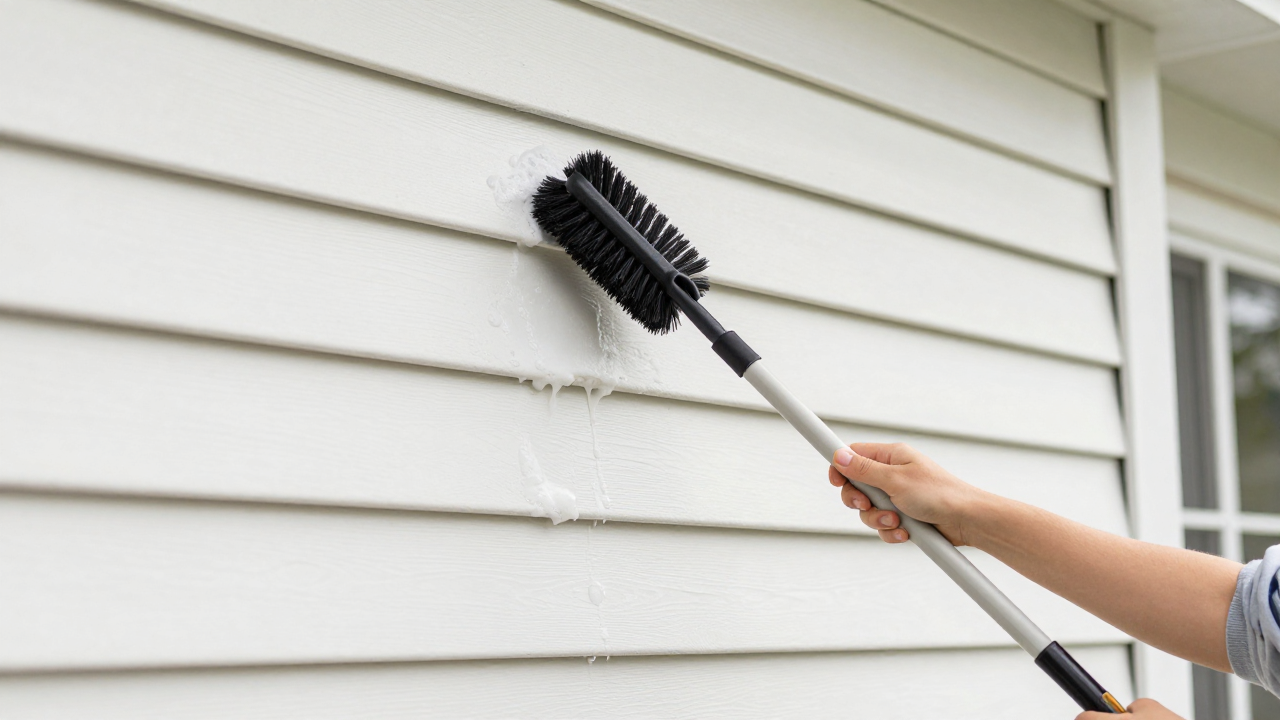
Proper care extends vinyl siding’s service life by 10 to 15 years. The key is annual inspection, gentle cleaning, and quick repairs of small problems before they become systemic. Reactive maintenance – waiting until something fails – costs more and doesn’t extend lifespan the same way.
Annual washing removes dirt, pollen, and airborne grime before they stain the surface or feed mildew growth. A standard garden hose with a soft-bristle brush on a long handle and a mild detergent is enough for most homes.
Skip the pressure washer. High-pressure water forces moisture up under the laps, behind the panels, and into any gaps in caulking – the exact damage pattern that proper maintenance is meant to prevent. Pressure washing is one of the most common ways homeowners accidentally shorten their siding’s lifespan.
Solvents, abrasive cleaners, strong degreasers, and undiluted bleach damage the vinyl surface and strip UV-protective coatings. Once those coatings are removed, fading and brittleness accelerate.
For mildew spots, a diluted bleach solution of one part bleach to four parts water works well, applied to the affected area only and rinsed thoroughly afterward. Don’t apply it to the whole house, and don’t leave it to dwell on the panels.
Walk the perimeter of the house each spring looking for cracks, loose or dislodged panels, gaps in caulking at windows and doors, and pulled nails at the nailing hem. Pay extra attention to walls that have been exposed to wind-driven rain or hail during winter storms.
Catching small problems in spring prevents a full summer of water intrusion behind the siding. A single loose panel found in April and refastened the same weekend is a non-event. The same panel left through July and August can soak the sheathing behind it.
Branches that rub against siding wear down the surface and can scratch through protective pigment layers. Dense foliage held against the wall traps moisture, blocks airflow, and creates ideal conditions for mold and algae growth.
Aim for at least 2 to 3 feet of clearance between any plant and the siding. That gap also makes annual washing and inspection easier and keeps mulch from sitting directly against the bottom course of panels.
Vinyl begins to soften and warp around 160-165°F. Grills, fire pits, chimineas, and other heat sources should sit at least 10 feet from any vinyl wall to stay well below that threshold.
Reflective glare is a less obvious but real risk. Low-E windows on a neighboring house can concentrate sunlight onto a nearby wall and create hot spots that melt the panels. If a wall shows localized warping in a pattern that doesn’t match the sun’s direct path, check for reflected glare on sunny afternoons.
Vinyl expands and contracts too much for conventional exterior paint. Within a few seasons, the paint bubbles, cracks, and peels – and the peeling layer is harder to remove than it was to apply.
Some manufacturers produce vinyl-safe paints in limited color ranges, formulated to flex with the panel. Even then, painting typically voids the original manufacturer’s warranty. For most homeowners at the fade stage, replacing the siding outright is a better long-term investment than painting it.
The caulk at windows, doors, corner posts, and siding terminations is what keeps water from running behind the panels. Inspect it every spring along with the panels, and replace any cracked, shrunken, or missing caulk promptly using exterior-grade polyurethane or silicone.
Wood trim around the siding also plays a role. Repaint trim every 5 to 7 years to keep it sealed – when trim fails, the siding edges that meet it are the next thing to take water damage.
A contractor can check the things a homeowner can’t easily see: fastening tension behind the panels, water-resistive barrier integrity, and flashing at windows, doors, and other penetrations. These are the elements that determine whether the siding is actually protecting the wall behind it.
Catching a WRB failure or flashing defect early saves the entire wall assembly. By the time that kind of damage is visible from outside, the sheathing and often the framing have already started to degrade, and repair costs climb quickly.
None of these habits is expensive or time-consuming individually. Done together on a regular schedule, they are the difference between vinyl siding that hits 20 years and vinyl siding that hits 35.


Embark On Your Build With Us!
we will be in touch with you soon
