

8 min read
Feb 27, 2026
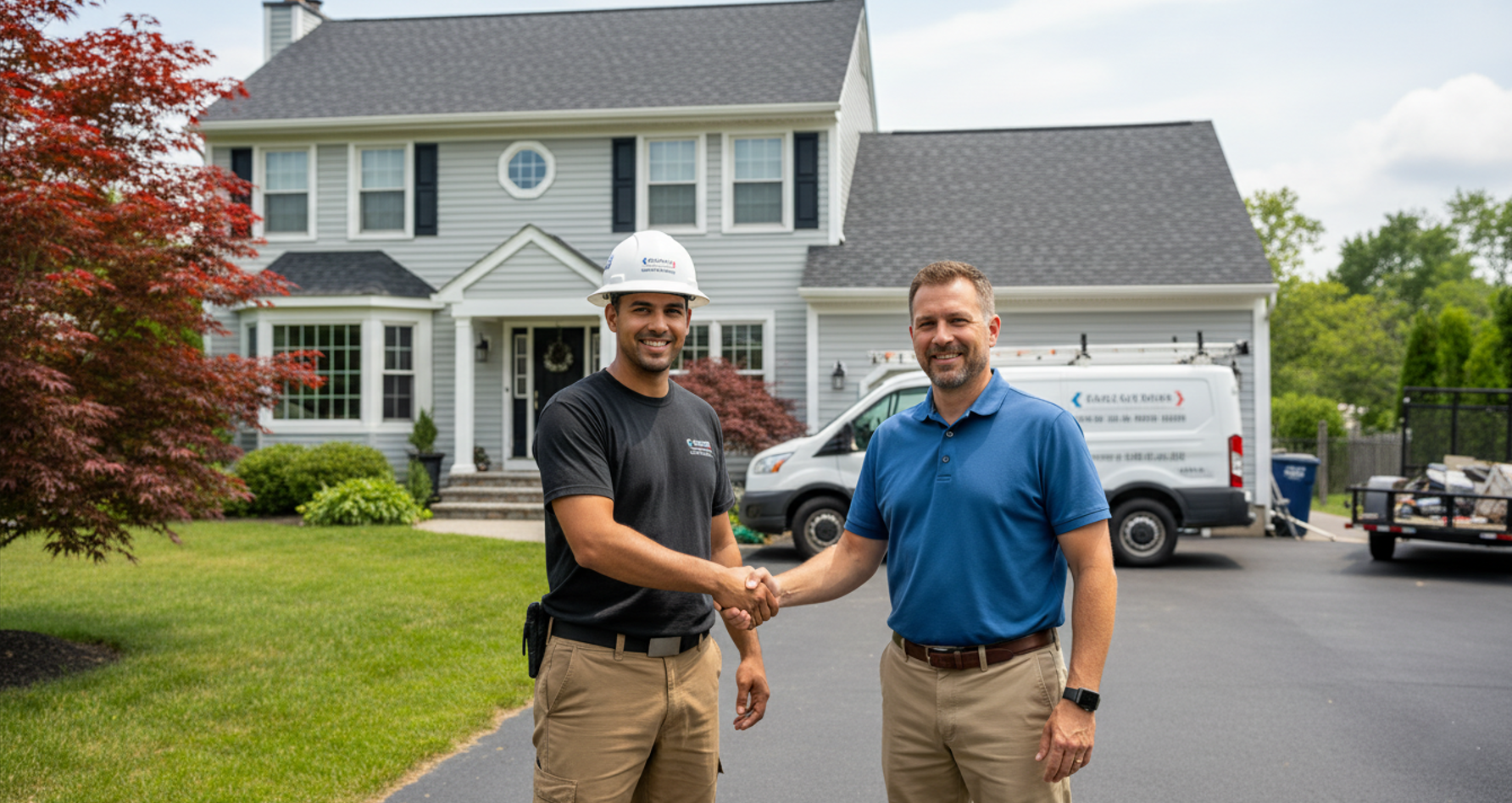
Choosing a roofing contractor requires verifying five things before signing any agreement: an active license, valid insurance, written estimates, verifiable references, and clear warranty terms. The steps below cover the full process from first contact to contract signing, including the specific questions to ask, documents to request, and warning signs that indicate an unreliable contractor.

Before contacting any roofing company, use this checklist to track each contractor you evaluate. A roofer who passes every item on this list is worth hiring.
Each step is explained in detail below.
Ask every roofing contractor for their state contractor license number before scheduling an estimate. In New Jersey, all home improvement contractors must register with the Division of Consumer Affairs and hold an active NJ HIC (Home Improvement Contractor) registration. In Pennsylvania, licensing requirements vary by municipality, so check with your local building authority.
Request the following from every contractor: license or registration number, physical business address, tax identification number, and business phone number. A contractor who cannot produce any of these is not a legitimate operation.
You can verify a New Jersey contractor’s registration through the NJ Division of Consumer Affairs online license verification tool. In Pennsylvania, the Attorney General’s office maintains a contractor complaint database. Both searches are free and take less than five minutes.
Hiring an unlicensed contractor eliminates your legal protections. If a dispute arises over defective work, you cannot file a complaint with the state licensing board. In New Jersey, contracting without an HIC registration is a violation of the Consumer Fraud Act, which means courts may award you treble damages if the unregistered contractor performed substandard work.
Even in states where a roofing license is not mandatory, a registered contractor demonstrates a baseline commitment to operating a legitimate business. Contractors who avoid registration often do so to evade accountability.
Request copies of two insurance certificates from every roofing contractor: general liability insurance and workers’ compensation insurance. Do not accept verbal confirmation. Ask for the actual certificate documents and verify them directly with the insurance carrier.
General liability insurance covers damage to your property caused by the contractor during the project. If a crew member drops a tool through your skylight or damages your siding during tear-off, this policy pays for the repair. Look for a minimum coverage of $1 million per occurrence.
Workers’ compensation insurance covers medical costs and lost wages if a worker is injured on your property. Without this coverage, you, as the homeowner, can be held financially liable for the injury. Every state has different minimum requirements, but any reputable roofing contractor carries workers’ comp regardless of legal minimums.
To verify coverage, call the insurance company listed on the certificate and confirm three things: the policy is currently active, the policy covers roofing work, and the contractor named on the certificate is the same company you are hiring. Certificates can be forged or expired, so a direct call is the only reliable verification method.
Contact a minimum of three roofing contractors and request a written estimate from each. A proper estimate is an itemized document – not a single number on a business card or a verbal quote over the phone.
Each written estimate should include: cost of materials with specific brand and product names, cost of labor, cost of removing and disposing of the old roof, cost of building permits, projected start and completion dates, and details on jobsite cleanup and debris removal.
Compare estimates by scope of work, not by total price alone. One contractor may include full tear-off, new underlayment, flashing replacement, and dumpster removal in the price. Another may quote only the shingle installation and charge separately for everything else. Line-by-line comparison is the only way to evaluate whether two quotes cover the same work.
An estimate that comes in more than 25% below the other two is a warning sign. The most common reasons for unusually low bids are the use of cheaper materials than specified, plans to skip proper underlayment or flashing work, or hidden charges that appear after the project starts.
Ask each contractor for at least five references from completed roofing projects in the past 12 months. Then contact those homeowners directly and ask specific questions about the work.
When calling references, ask these questions: Did the crew start and finish on the dates promised? Were there any unexpected cost increases after work began? How did the contractor handle problems or complications? Was the jobsite cleaned up completely after the project? Would you hire this contractor again?
For online verification, check three sources: Google Business Profile, the Better Business Bureau, and Angi or HomeAdvisor. Pay particular attention to how the contractor responds to negative reviews. A professional response that addresses the complaint indicates accountability. Silence or hostility indicates the opposite.
Look for patterns rather than individual complaints. A single one-star review about a scheduling delay is not a disqualifier. Five separate reviews mentioning the same issue – hidden charges, incomplete cleanup, or unresponsive communication – is a pattern that predicts your experience.
Ask to see photos of completed projects. A contractor with years of experience should have a portfolio of past work. If they cannot show a single finished roof, treat that as a warning sign.

Never begin a roofing project without a signed written contract. The contract is the only document that legally protects you if something goes wrong. If a contractor refuses to provide a written agreement, do not hire them.
The contract must include a complete scope of work describing exactly what will be done: tear-off of the existing roof, installation of underlayment, flashing, drip edge, ventilation, and the final roofing material.
All materials must be listed by brand name, product line, and color. A contract that says “architectural shingles” without specifying the manufacturer and product is too vague to enforce.
The payment schedule must be written into the contract with specific amounts tied to specific milestones. The standard structure is a deposit of 10-30% at signing, with the balance due upon completion and your approval of the finished work.
Start and completion dates must be included. The contract should also state how weather delays will be handled and what happens if the project exceeds the estimated timeline.
The contract must specify who is responsible for removing the old roof, disposing of debris, and cleaning the property. It should also address liability for damage to landscaping, driveways, siding, or neighboring properties during the project.
Both the manufacturer’s warranty and the contractor’s workmanship warranty should be described in the contract, including coverage duration and any conditions that void the warranty.
In New Jersey, homeowners have a three-business-day right to cancel any home improvement contract after signing, under the NJ Consumer Fraud Act. The contractor is required to inform you of this right in writing.
Use these questions during your first meeting with each roofing contractor. The answers will reveal whether the contractor is qualified, transparent, and reliable.
About the business:
About the project:
About materials:
About the process:
About warranties:
A contractor who answers every question directly and without hesitation is demonstrating transparency. A contractor who becomes evasive, vague, or irritated by these questions is showing you how they will communicate during the project.
Certain behaviors are consistent warning signs of unreliable or fraudulent roofing contractors. If you encounter any of the following, stop the hiring process and move to the next candidate.
Door-to-door solicitation after a storm. Contractors who canvass neighborhoods immediately after hail or wind damage are often “storm chasers” – temporary operators who collect payment and leave before warranty issues surface.
Demand for a full or large upfront payment. Any contractor asking for more than 30% before work begins is outside the industry norm. Full prepayment eliminates your leverage if the work is incomplete or defective.
No physical business address. A contractor reachable only by cell phone, with no office, no yard, and no permanent address, can disappear without consequence.
High-pressure urgency tactics. Phrases like “this price is only good today” or “I can only fit you in if you sign now” are designed to prevent you from comparing options. A legitimate contractor will honor their estimate for at least 30 days.
Cash-only payment. Cash transactions create no paper trail. Without a traceable payment method, you have no proof of what you paid or what was promised.
Inability to provide license or insurance documents. If a contractor says they will “send it later” or “it’s at the office,” they either do not have the documents or the documents are expired.
Suggestion to skip the building permit. A contractor who recommends avoiding the permit “to save money” is asking you to accept legal liability. Unpermitted work can result in fines, failed inspections, and voided insurance claims.
An estimate far below every other bid. A quote that undercuts three other estimates by 25% or more typically means the contractor plans to cut corners on materials, skip necessary steps, or add charges after the project starts.
Refusal to provide a written contract. No written agreement means no legal protection for either party. A verbal promise has no enforcement mechanism.
A standard roofing payment schedule protects both the homeowner and the contractor. Never pay the full amount before work begins.
The typical payment structure for a residential roofing project is: a deposit of 10-30% at contract signing, followed by the remaining balance due upon project completion and homeowner approval. Some contractors include an optional mid-project payment after materials are delivered and work has started, but this is not required for most residential jobs.
If a contractor requests more than 50% before starting work, treat it as a red flag. The only exception is when the project requires custom-order materials with long lead times, and the contractor provides documentation of the order and associated costs.
Pay by check or credit card. Both methods create a traceable record of every payment. A credit card also provides chargeback rights if the contractor fails to deliver the agreed work. Never pay in cash.
Do not release the final payment until every item on the punch list is complete, you have inspected the finished roof, and the project has passed the municipal inspection (if a building permit was required). The final payment is your last point of leverage – once it is released, your ability to compel corrections drops significantly.


Embark On Your Build With Us!
we will be in touch with you soon
