

8 min read
Feb 27, 2026

The best flat roofing material depends on your budget, the type of space beneath the roof, and your local climate. For most residential homeowners, TPO membrane offers the strongest balance of cost, energy efficiency, and lifespan. For maximum durability, standing seam metal is the premium option. Below is a breakdown of seven flat roof materials with their costs, lifespans, and best use cases to help you choose.
There are seven main flat roof materials used in residential and commercial construction. The table below compares them by lifespan, average cost per square foot (materials and labor), energy efficiency, and ideal application.
|
Material |
Lifespan |
Cost per Sq Ft |
Energy Efficiency |
Best For |
Key Drawback |
|
TPO |
20-25 years |
$5-$8 |
High |
Residential living spaces |
Puncture resistance lower than EPDM |
|
EPDM |
25-30 years |
$4-$7 |
Low |
Garages, non-living spaces |
Black color absorbs heat |
|
PVC |
20-25 years |
$6-$9 |
High |
Chemical-exposed buildings |
Higher cost than TPO |
|
Modified Bitumen |
15-20 years |
$4-$7 |
Medium |
Budget commercial roofs |
Shortest lifespan |
|
Built-Up Roof (BUR) |
15-30 years |
$5-$10 |
Medium |
Large commercial buildings |
Heavy, slow to install |
|
Standing Seam Metal |
30-50 years |
$10-$18 |
Medium-High |
Long-term residential investment |
Highest upfront cost |
|
Spray Foam (SPF) |
20-30 years |
$5-$9 |
Very High |
Irregular roof shapes, insulation priority |
Requires recoating every 10-15 years |
Each material is detailed below with pros, cons, and specific recommendations.
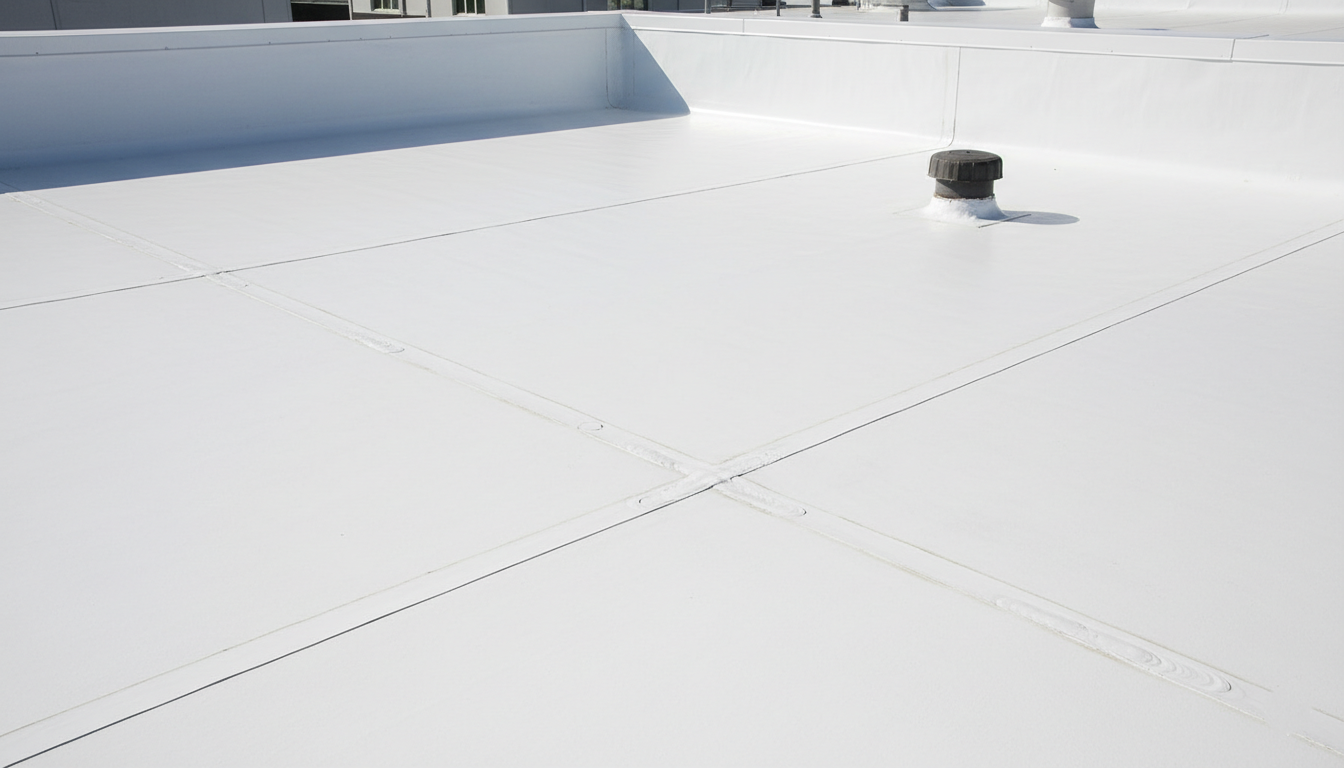
TPO (thermoplastic polyolefin) is a single-ply white membrane that reflects solar heat instead of absorbing it. It lasts 20 to 25 years and typically costs between $5 and $8 per square foot installed.
TPO sheets are welded together with hot air to form a continuous, watertight surface. The membrane is installed over a layer of rigid insulation board, which sits on the roof deck. This combination creates both a weather barrier and a thermal barrier in a single system.
TPO carries Energy Star certification for its reflective properties. It resists ultraviolet radiation, ozone exposure, and chemical runoff. It is also one of the least expensive membrane options for flat roofs.
The main drawback of TPO is lower puncture resistance compared to EPDM. Product quality can also vary between manufacturers, since TPO formulations are not standardized across the industry. TPO has been on the market for roughly 30 years, which is shorter than EPDM’s track record.
TPO is best suited for flat roofs over bedrooms, living rooms, and other occupied spaces. Its heat-reflective surface reduces cooling costs during summer, which makes it an effective choice for residential homes in warm or mixed climates.
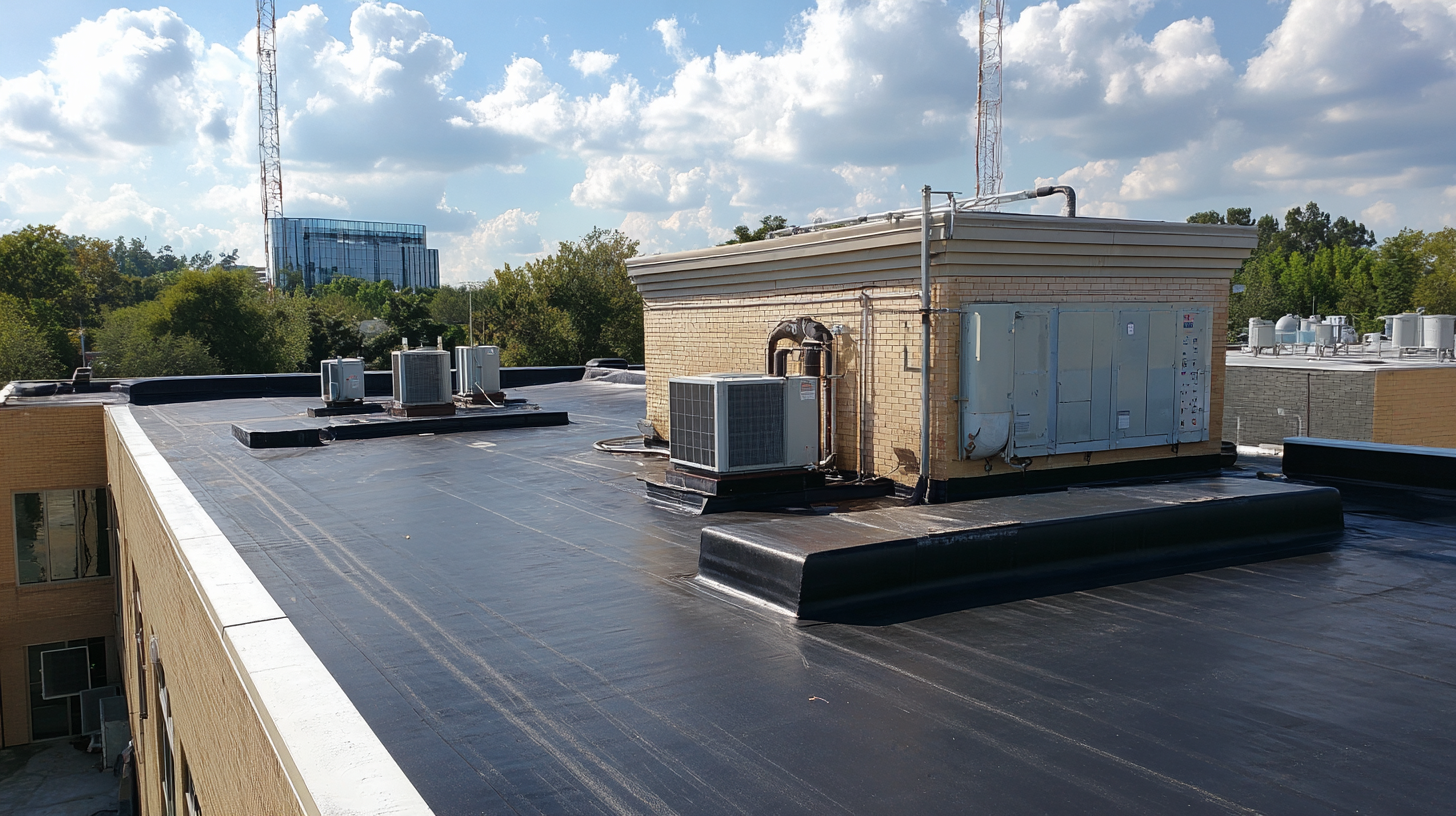
EPDM (ethylene propylene diene terpolymer) is a synthetic rubber membrane, typically black, that delivers the highest durability among single-ply flat roof systems. It lasts 25 to 30 years and costs between $4 and $7 per square foot installed, making it the most affordable membrane option.
EPDM is installed either fully adhered (glued to the roof deck) or mechanically fastened with plates and screws. Both methods create a continuous waterproof layer. The material comes in large sheets, which means fewer seams and fewer potential leak points.
EPDM has a proven track record spanning over 50 years in the roofing industry. It withstands temperature extremes, hail, and high winds. Maintenance costs are low because small punctures and tears can be patched without replacing the entire membrane.
The black surface absorbs significant solar heat, which raises indoor temperatures in the space below the roof. This makes EPDM a poor choice for bedrooms and living areas. Over time, EPDM can shrink, pulling at seams and flashings. It is also more vulnerable to punctures from foot traffic or falling debris than rigid roofing systems.
EPDM is best suited for garages, workshops, storage areas, and commercial buildings where heat absorption is not a concern. It is the strongest option for homeowners who need a durable flat roof at the lowest cost.
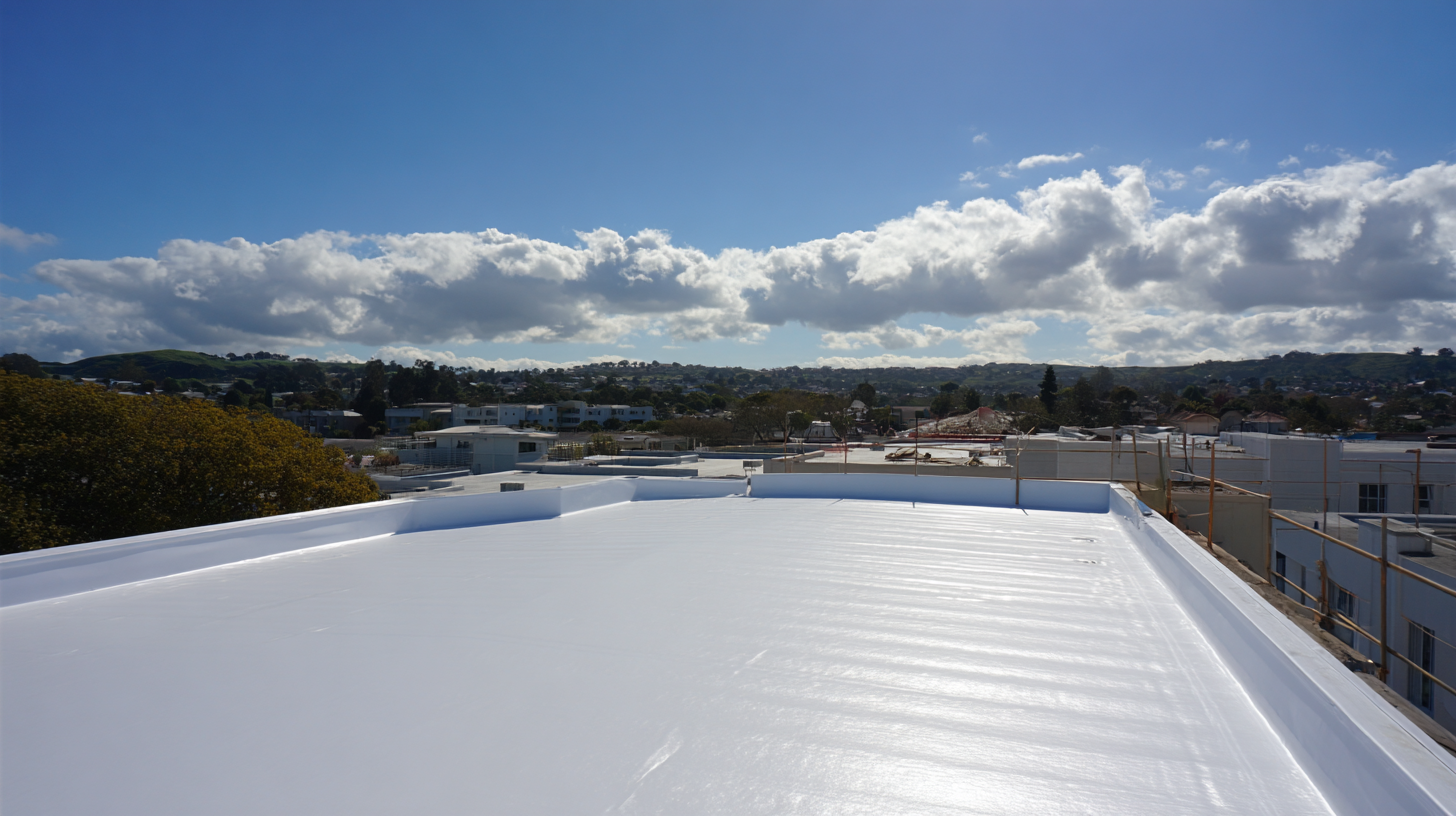
PVC (polyvinyl chloride) is a single-ply white membrane that shares many characteristics with TPO but offers superior chemical resistance. It lasts 20 to 25 years and costs between $6 and $9 per square foot installed, which makes it more expensive than TPO.
PVC membranes are heat-welded at the seams, just like TPO. The resulting bond is as strong as the membrane itself. PVC has been used in commercial roofing for over 50 years, giving it a longer performance history than TPO.
The primary advantage of PVC over TPO is its resistance to grease, animal fats, and chemical vapors. It also provides strong fire resistance and high reflectivity for energy savings.
PVC costs more than TPO while delivering similar energy performance. Its puncture resistance is lower than EPDM, and the material can become brittle in extremely cold temperatures over time.
PVC is the better choice over TPO when the building is near sources of chemical emissions or exhaust. Restaurants, commercial kitchens, and industrial facilities with rooftop grease exhaust benefit most from PVC’s chemical resistance.
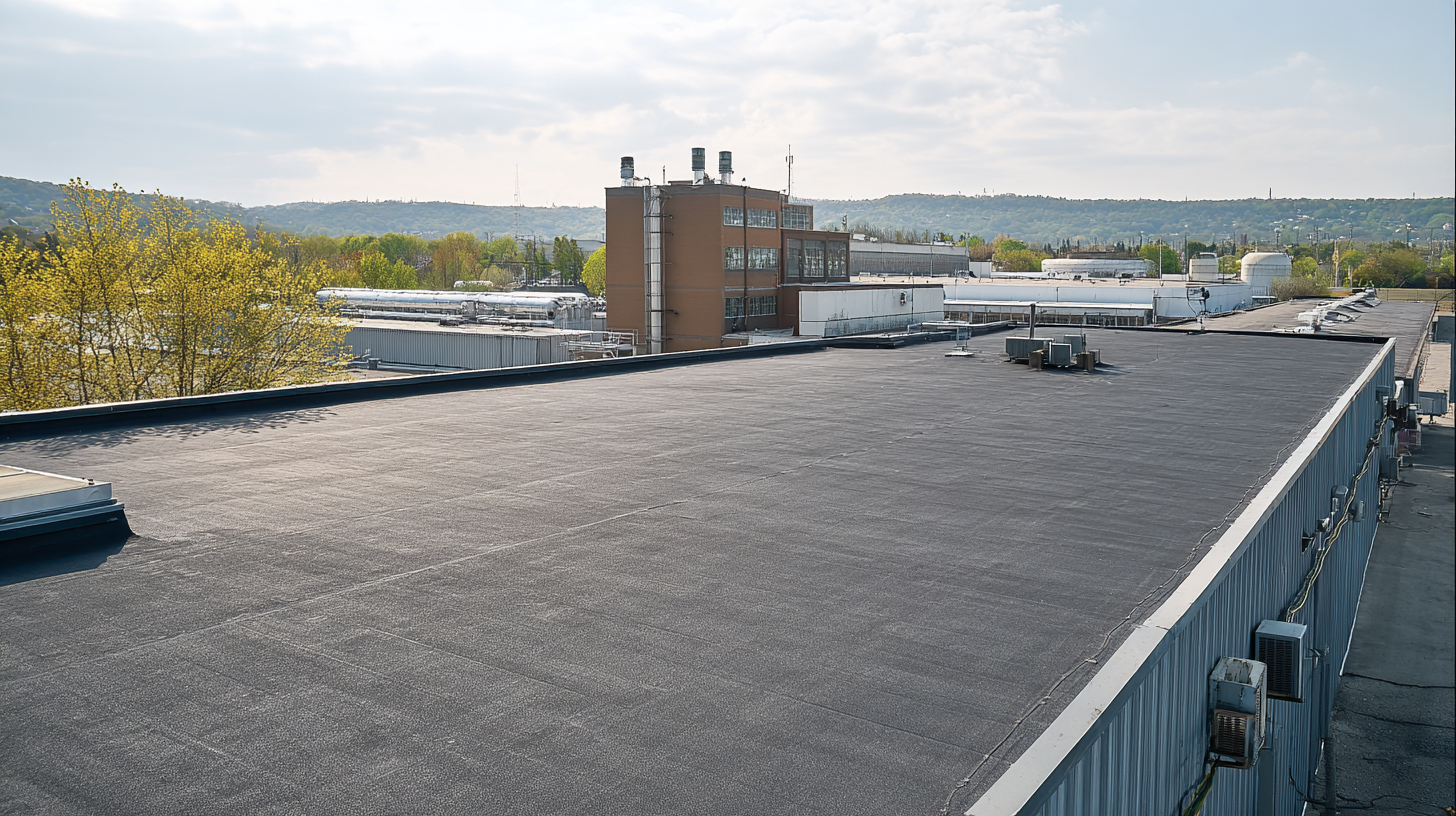
Modified bitumen is an asphalt-based membrane reinforced with polymers (APP or SBS) to improve flexibility and weather resistance. It can be installed by torch application, cold adhesive, or self-adhesion. It lasts 15 to 20 years and costs between $4 and $7 per square foot installed.
The multi-layered construction provides redundant waterproofing. If the top layer is damaged, the base layer continues to protect the structure. Modified bitumen handles temperature fluctuations well, expanding and contracting without cracking.
Modified bitumen is a well-established technology with predictable performance. It is widely available, and most roofing contractors are experienced with its installation.
The lifespan of 15 to 20 years is the shortest among the materials listed here. Locating the source of a leak can be difficult because water can travel between the layers before appearing inside the building. The torch-applied method also carries a fire risk during installation.
Modified bitumen is best suited for budget-conscious commercial roof replacements where a quick, proven solution is needed and maximum longevity is not the priority.
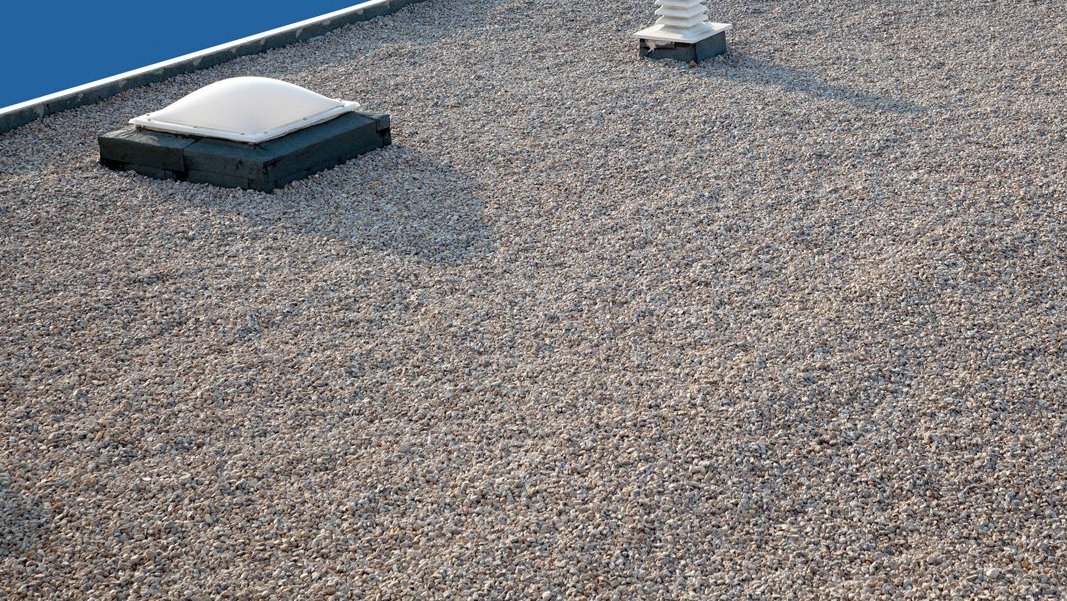
A built-up roof consists of multiple alternating layers of asphalt (bitumen) and reinforcing fabric (ply sheets), finished with a top layer of gravel, slag, or mineral granules. BUR systems have been in use for over 100 years. They last 15 to 30 years and cost between $5 and $10 per square foot installed.
The gravel surface layer provides natural fire resistance and UV protection. The multiple asphalt layers create a highly effective waterproofing system. Once installed, BUR requires relatively little maintenance compared to single-ply membranes.
BUR is one of the most expensive flat roof systems due to both material and labor costs. Installation takes longer than single-ply options because each layer must be applied and set separately. The finished assembly is heavy, which means the building structure must be strong enough to support the additional load. BUR is also more susceptible to wind uplift at the edges than mechanically fastened systems.
Built-up roofs are best suited for large commercial and industrial buildings with reinforced structural framing. They are not a practical choice for most residential flat roofs due to the weight and installation complexity.

Standing seam metal roofing consists of interlocking steel or aluminum panels joined by raised seams. It is the longest-lasting flat roof material, with a lifespan of 30 to 50 years. It costs between $10 and $18 per square foot installed, making it the most expensive option on this list.
The raised seam design allows panels to expand and contract freely during temperature changes without compromising the waterproof seal. Standing seam metal resists fire, wind, corrosion, and pest damage. It requires minimal maintenance over its lifespan, and the Kynar 500 painted finish provides a wide range of color options.
Metal roofing requires professional installation with precise panel alignment. Without adequate insulation beneath the panels, rain noise can be noticeable. The upfront cost is significantly higher than any membrane system.
Standing seam metal requires a minimum roof pitch of approximately 1/4:12 to 1/2:12, depending on the manufacturer. This means the roof must have a slight slope-true zero-pitch flat roofs are not suitable for metal panels.
Standing seam metal is the best choice for homeowners with the budget for a long-term investment and for visible roofs where curb appeal matters. The combination of a 30-to-50-year lifespan and color selection makes it the premium residential flat roof option.
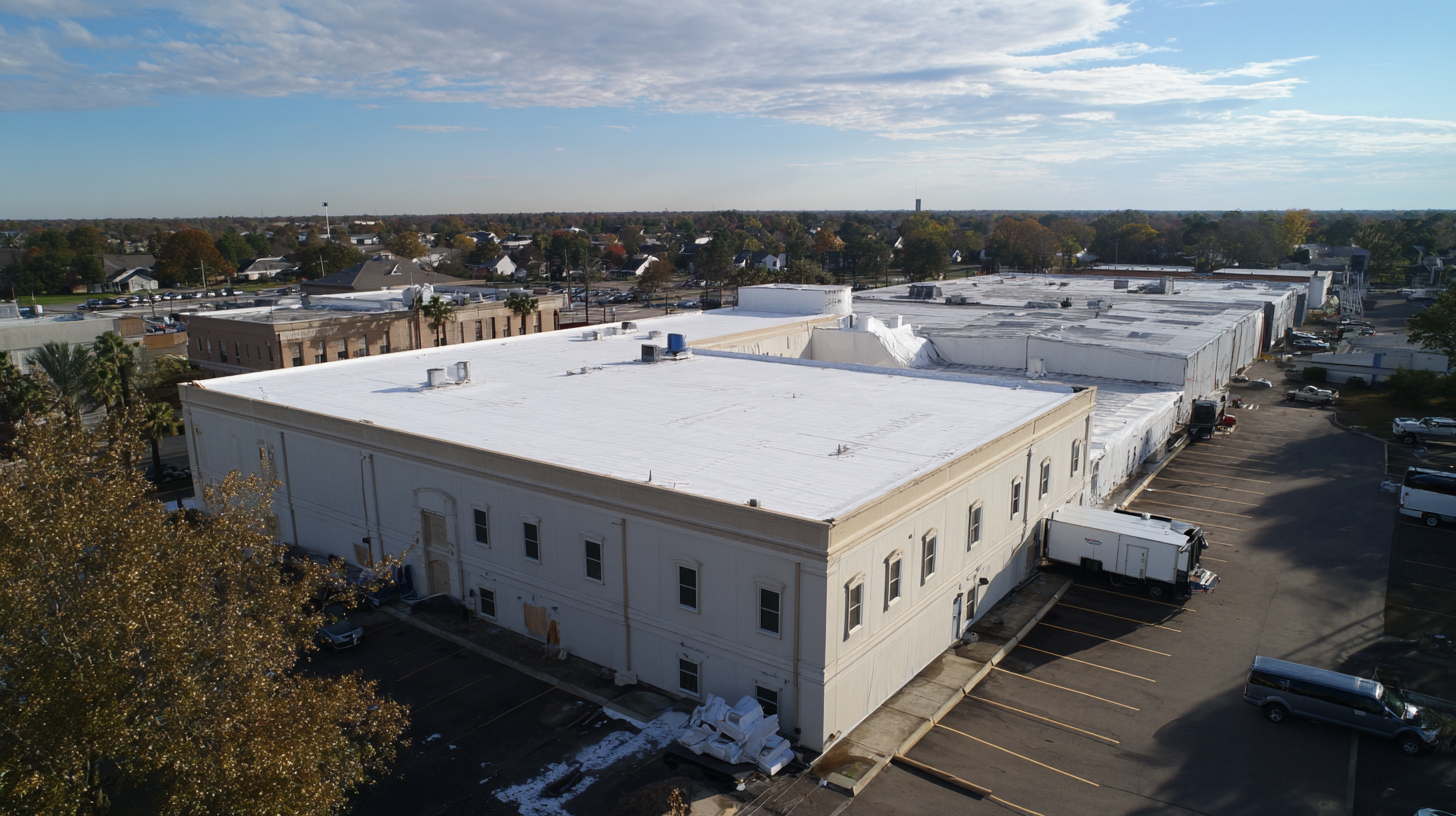
Spray polyurethane foam (SPF) is a liquid material applied by spraying onto the roof surface, where it expands and hardens into a seamless, monolithic layer. It lasts 20 to 30 years with a protective top coating reapplied every 10 to 15 years. Installed cost ranges from $5 to $9 per square foot.
SPF delivers the highest thermal insulation value of any flat roof material, with an R-value of approximately 6.5 per inch of thickness. Because it is sprayed as a liquid, there are no seams, joints, or fastener penetrations-the most common sources of roof leaks.
The seamless application also means SPF conforms to any roof shape, including curved surfaces, irregular layouts, and roofs with many penetrations (pipes, vents, HVAC units). The cured foam adds minimal weight to the structure.
SPF requires a protective elastomeric or silicone coating to shield it from UV degradation and physical damage. Without this coating, the foam deteriorates rapidly. The recoating cycle every 10 to 15 years adds to lifetime maintenance costs. Installation requires specialized equipment and an experienced contractor, as errors in mixing ratio or application thickness affect performance.
SPF is best suited for buildings with complex roof geometry and for projects where thermal insulation is the top priority. It is also an effective option for re-roofing over existing flat roof systems without a full tear-off.
The right flat roof material depends on four factors: your budget, the space below the roof, your local climate, and how long you want the roof to last. The guidelines below match each situation to the best option.
By budget. If your budget is limited, choose EPDM or modified bitumen. Both cost between $4 and $7 per square foot and deliver reliable performance. If you have a mid-range budget, TPO or PVC offer better energy efficiency at $5 to $9 per square foot. If your budget allows a premium investment, standing seam metal at $10 to $18 per square foot provides the longest lifespan and lowest lifetime cost per year.
By space below the roof. If the flat roof covers a bedroom, living room, or any occupied space, choose TPO or PVC. Their white reflective surface reduces heat transfer into the room below, cutting cooling costs. If the flat roof covers a garage, workshop, or storage area, choose EPDM. Heat absorption is not a concern for unoccupied spaces, and EPDM offers the longest membrane lifespan at the lowest price.
By climate. In hot climates, choose TPO or PVC for their reflective properties. In cold climates with large temperature swings, choose EPDM or standing seam metal-both handle thermal expansion and contraction without damage. In regions with high winds, BUR and standing seam metal provide the strongest resistance to uplift. In the Mid-Atlantic region (New Jersey, Pennsylvania), where summers are hot and winters bring freezing temperatures, TPO and standing seam metal offer the best adaptability across seasons.
By lifespan goal. If you need a roof that lasts 15 to 20 years, modified bitumen or BUR will meet that range at a lower cost. If you want 20 to 25 years of service, TPO, PVC, or EPDM are the right options. If you want 30 to 50 years of protection, standing seam metal is the only flat roof material that reaches that lifespan.



Embark On Your Build With Us!
we will be in touch with you soon
