
6 min read
Jun 23, 2026

Cutting metal roofing requires the right tool for the cut type, accurate marking on the back side of the panel, and deburring after every cut. The three most commonly used tools are tin snips, electric metal shears, and a drill nibbler. The full process follows 6 sequential steps – from measurement to final fit check – each of which affects the accuracy and safety of the result.
The choice of cutting tool depends on two variables: the type of cut required and the thickness of the metal panel. Using the wrong tool for either variable produces inaccurate cuts, damaged panel coatings, or deformed panel profiles.
|
Tool |
Best Cut Type |
Panel Thickness |
When to Use |
|
Tin Snips (yellow) |
Straight |
Thin |
Short cuts, detail work |
|
Tin Snips (red/green) |
Curved, circular |
Thin |
Counter/clockwise arcs |
|
Electric Metal Shears |
Long straight |
Medium-thick |
Full-length panel runs |
|
Circular Saw + metal blade |
Long straight |
Thick |
Large panels, high volume |
|
Drill Nibbler |
Circular |
Any |
Vents, skylights, chimneys |
|
Angle Grinder |
Straight/angled |
Thick |
Heavy-duty cuts |
Tin snips are the standard choice for short and shaped cuts on thin-gauge panels. Electric metal shears handle long, straight cuts on medium and thick panels without physical fatigue. A drill nibbler is the correct tool for circular cutouts on ribbed metal panels, where tin snips would deform the profile instead of cutting cleanly.

Cutting metal roofing panels follows 6 sequential steps. Skipping any step increases the risk of an inaccurate panel fit, coating damage, or injury during installation.
Use a measuring tape to record all required dimensions: panel length, width, overlap allowance, eave overhang, and the size of any openings for pipes, vents, or chimneys. Overlap on corrugated panels requires a minimum of two ridges for a watertight seal.
Place the panel face-down on a flat surface. Draw all cut lines on the back side using a permanent marker and a straightedge. Verify each measurement against your notes before proceeding.
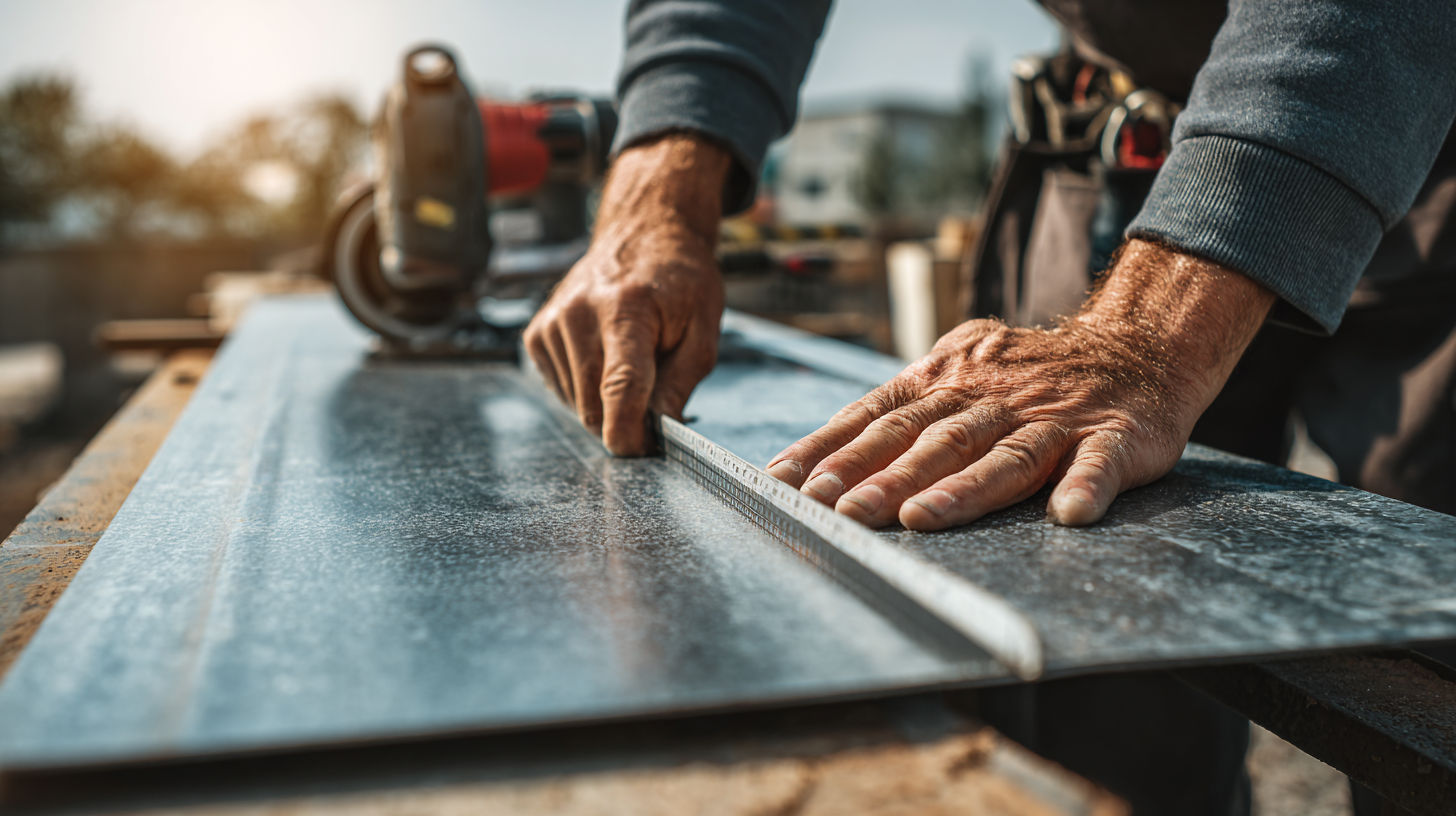
Clamp the panel to a stable workbench before cutting. An unsecured panel shifts under tool pressure, which causes the cut line to drift and produces an uneven edge.
Guide the cutting tool along the marked line with steady, even pressure. Do not apply lateral force to the blade or shear. Stopping mid-cut and repositioning increases the risk of a jagged edge.
Run a metal file along all cut edges immediately after cutting. Metal burrs are sharp enough to cause lacerations during panel handling and installation.
Hold the cut panel against its adjacent panel before mounting. Check that the overlap is correct and that any cutouts align with their corresponding openings. Make adjustments on the workbench, not on the roof.
The correct cutting technique depends on whether the cut is straight, angled, or circular. Each cut type has a specific common mistake that directly affects panel fit quality and the long-term performance of the roof covering.
Use yellow tin snips for short straight cuts or electric shears for full panel lengths. Feed the tool forward in a continuous motion without stopping. The most common mistake is cutting from the front (coated) side of the panel. Cutting from the front scratches the protective coating, creating exposed metal that corrodes faster than the surrounding surface.
Mark all direction-change points on the panel before starting the cut. Cutting an angle requires following a pre-marked line, not adjusting the tool’s direction mid-cut. Attempting to steer the blade at an angle while cutting produces a ragged, uneven edge that prevents a tight panel overlap.
Before using tin snips for a circular cutout, drill a starter hole in the center of the marked circle. Insert one blade of the snips into the hole and cut outward to the marked line. Red-handled snips cut counterclockwise; green-handled snips cut clockwise. For circular cuts on ribbed metal panels, use a drill nibbler instead of tin snips. Tin snips compress the ridges of a ribbed panel instead of cutting through them, which deforms the panel profile and makes the cutout unusable.
Unfinished cut edges have microscopic metal fragments along the cut line. These fragments accelerate surface corrosion at the cut point and cause lacerations when panels are handled without gloves. Filing all cut edges immediately after cutting eliminates both risks.
Cutting metal roofing produces three simultaneous hazards: sharp metal burrs on cut edges, airborne metal dust, and noise levels that regularly exceed 85 dB with power tools. All three are addressed by standard PPE worn before the first cut.
Required PPE:
Work on a stable, flat surface – a heavy-duty workbench or solid ground. Keep the area clear of loose materials and bystanders. When using an angle grinder or circular saw, keep a fire extinguisher within reach: both tools produce sparks that can ignite nearby flammable materials.
DIY cutting is appropriate when replacing one to three panels with straightforward straight cuts and when the person performing the work has basic experience with hand or power tools. Outside these conditions, professional installation reduces the risk of panel misfit, water infiltration, and voided manufacturer warranties.
Professional installation is the correct choice when the roof has a complex profile – multiple slopes, valleys, dormers, or irregular angles that require compound cuts. It also applies when the project covers a large area where cutting errors compound across multiple panels, or when the roofing material carries a manufacturer’s warranty that requires certified contractor installation. Penetrations such as chimneys, skylights, or HVAC equipment that require precise circular cutouts in ribbed panels add another layer of complexity that exceeds the standard DIY scope. Commercial buildings subject to local building code inspection require licensed contractor work regardless of project size.
An imprecise panel overlap – even by a quarter inch – is enough to allow water infiltration at the seam. On complex roofs, that margin of error is difficult to maintain without professional measurement and cutting equipment.
American Quality Remodeling handles full metal roofing installation across New Jersey and Pennsylvania, from initial measurement and panel cutting to final fastening and inspection. For projects that exceed a straightforward DIY scope, contact our team for a free estimate.


Embark On Your Build With Us!
we will be in touch with you soon
