
6 min read
Jun 23, 2026
Explore the basics of TPO roofing, including its material composition, performance benefits, lifespan, and where it is most commonly installed on flat and low-slope structures.

TPO (Thermoplastic Polyolefin) is a single-ply synthetic roofing membrane used primarily on flat and low-slope commercial roofs. The membrane consists of three layers: a thermoplastic polyolefin base, a polyester reinforcing scrim, and a top protective layer. According to the National Roofing Contractors Association (NRCA), TPO accounts for approximately 40% of the commercial roofing market in the United States, making it the most widely installed single-ply membrane system.
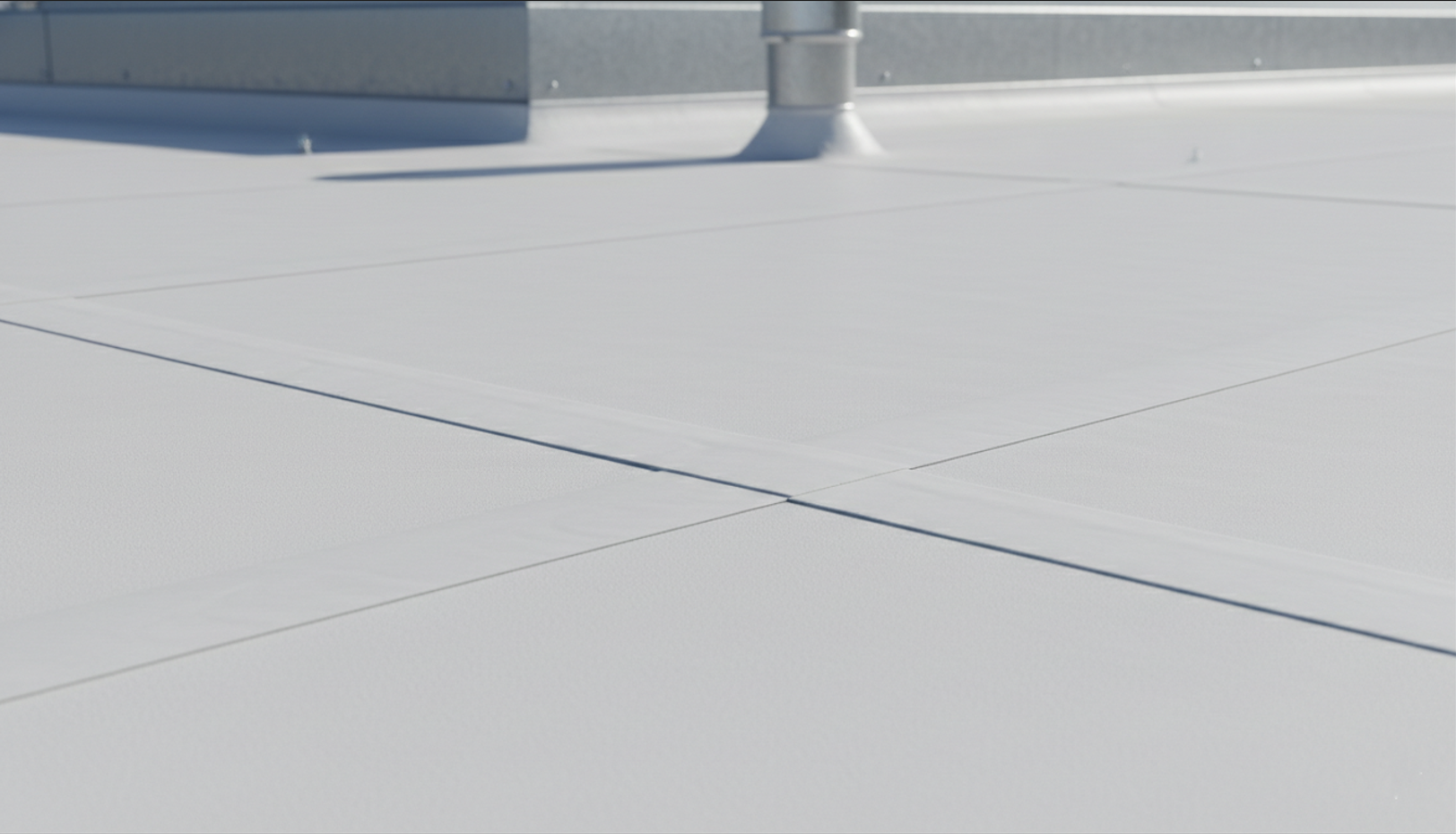
TPO membrane is manufactured from a blend of polypropylene and ethylene-propylene rubber. This combination gives the material flexibility at low temperatures and inherent resistance to UV radiation without requiring additional surface coatings.
The membrane has a three-layer structure. The bottom layer is the thermoplastic polyolefin base, which provides structural integrity and bonds to the substrate or insulation board. The middle layer is a polyester reinforcing scrim – a woven fabric embedded in the membrane that adds tensile strength and resistance to tearing. The top layer is a UV-stabilized polyolefin compound that protects the membrane from weathering and solar degradation.
TPO membranes are manufactured in rolls of 10, 12, or 20 feet wide. Thickness options are 45, 60, and 80 mil. Thicker membranes offer greater puncture resistance and longer service life; 60 mil is the most commonly specified thickness for standard commercial installations.
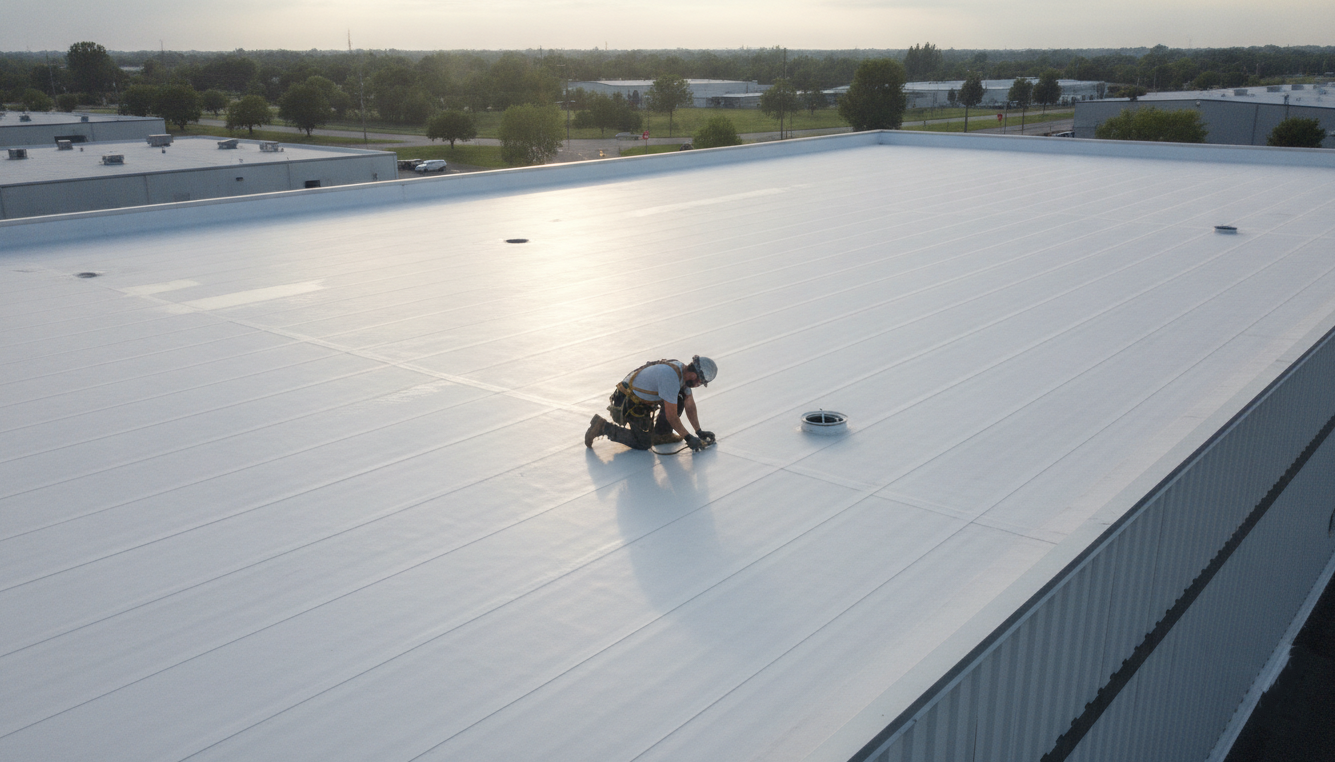
White is the standard color for TPO because it maximizes solar reflectance. Gray and tan variants are available but reflect less heat, which reduces the energy efficiency advantage that makes TPO a preferred choice over dark-colored membranes. The color is integral to the top layer of the membrane – it does not fade or peel as a surface coating would.
TPO membranes can achieve a UL Class A fire resistance rating. This is accomplished by incorporating fire-retardant additives into the polymer compound during manufacturing. Class A is the highest fire resistance classification under Underwriters Laboratories standards and is required for most commercial roofing applications.
The white surface of a TPO membrane reflects solar radiation rather than absorbing it. The Solar Reflectance Index (SRI) of white TPO is typically 0.75 to 0.85, which meets the Energy Star requirements for both steep-slope and low-slope roofing products.
A reflective roof surface reduces the amount of heat transferred into the building through the roof assembly. In commercial buildings with flat roofs and large unshaded roof areas, this reduces the cooling load during summer months. Studies by the Department of Energy’s Oak Ridge National Laboratory have found that white reflective roofs can reduce peak cooling demand by 10 to 15% compared to dark roofs in warm climates.
EPDM (Ethylene Propylene Diene Monomer) is the primary alternative single-ply membrane and is typically black. A black EPDM roof can reach surface temperatures of 150°F to 180°F on a hot summer day, while a white TPO roof under the same conditions typically stays below 110°F. This difference directly affects the heat gain transferred into the building interior.
TPO seams are joined using a hot-air welding gun that fuses the overlapping membrane sheets into a single continuous layer. The heat-welded seam creates a bond that is stronger than the membrane itself when performed correctly – the seam does not rely on adhesive, tape, or mechanical fasteners to maintain its seal. This seam method is one of the primary reasons TPO has displaced adhesive-bonded membranes in commercial roofing over the past two decades.
TPO, EPDM, and PVC are the three main types of single-ply roofing membranes. All three are used on flat commercial roofs, but they differ in base material, energy performance, seam attachment method, chemical resistance, cost, and expected lifespan.
|
Property |
TPO |
EPDM |
PVC |
|
Base material |
Polypropylene + rubber |
Synthetic rubber |
Polyvinyl chloride |
|
Standard color |
White (reflective) |
Black (absorptive) |
White / light gray |
|
Seam method |
Heat-welded |
Adhesive or tape |
Heat-welded |
|
Energy efficiency |
High |
Low |
High |
|
Chemical resistance |
Moderate |
Low |
High |
|
Avg. cost per sq. ft. |
$5-$12 |
$4-$10 |
$6-$14 |
|
Lifespan (maintained) |
20-30 years |
20-25 years |
20-30 years |
TPO is preferred over EPDM when energy efficiency is a priority – specifically in buildings with high cooling costs or in jurisdictions with cool roof requirements. TPO is also easier to weld on-site than EPDM, which requires adhesive bonding and is more sensitive to application temperature and surface contamination.
PVC is preferred over TPO in buildings where the roof is exposed to animal fats, cooking oils, or industrial chemicals. PVC has significantly higher chemical resistance than TPO and does not degrade when contacted by grease or petroleum-based substances. For this reason, PVC is the standard choice for restaurant rooftops and food processing facilities, while TPO is more common on warehouses, retail centers, and office buildings.
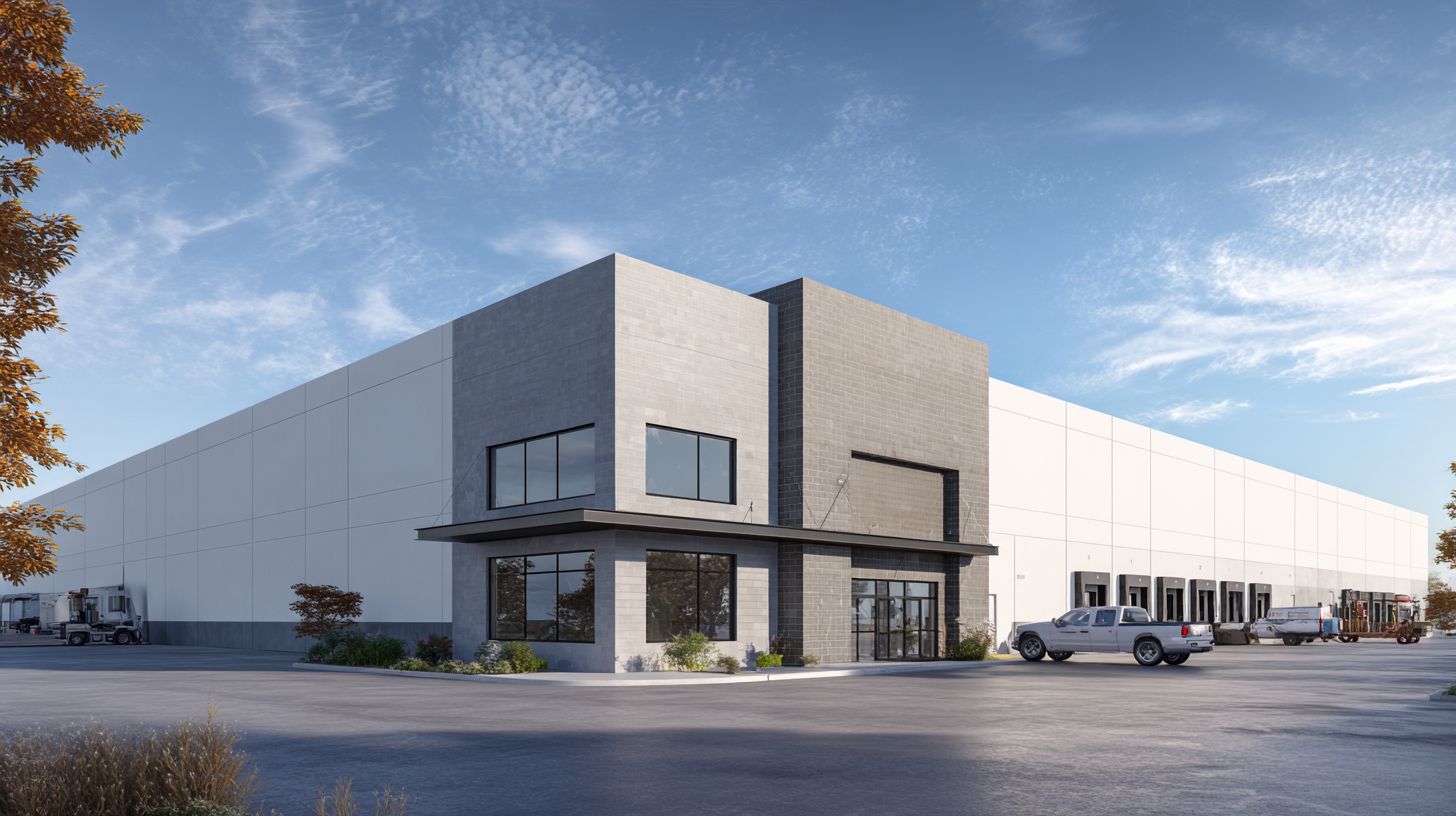
TPO is used primarily on flat and low-slope roofs of commercial buildings. Warehouses, distribution centers, big-box retail stores, office buildings, and light industrial facilities represent the most common installation contexts. These building types typically have large uninterrupted roof areas with minimal penetrations, which allows TPO to perform at its highest efficiency and reduces installation complexity.
On residential properties, TPO is not a standard material for primary roof surfaces. It is used on flat or low-slope sections where asphalt shingles or metal panels are not appropriate – typically detached garages, covered porches, home additions, and flat-roof sections of contemporary architecture. Local building codes in some jurisdictions restrict single-ply membrane use on residential structures; compliance depends on the municipality.
The minimum allowable slope for a TPO installation is ¼ inch per foot (a 2% grade). On roof surfaces below this slope, water does not drain adequately, and ponding water – standing water that remains more than 48 hours after rainfall – accelerates membrane degradation and voids most manufacturer warranties. Roofs with insufficient slope require tapered insulation or additional drains to achieve the minimum drainage grade before a TPO membrane can be installed.
A correctly installed and annually maintained TPO roof has a service life of 20 to 30 years. Without regular maintenance, the practical lifespan shortens to 15 to 20 years, primarily due to seam degradation and unrepaired membrane punctures that allow water to enter the insulation layer.
Four factors directly affect how long a TPO roof performs within its rated lifespan. Installation quality determines whether seams are fully fused and flashings are correctly terminated – poor installation is the leading cause of early failure. Membrane thickness affects puncture resistance and weathering durability. Climate determines the frequency and severity of thermal cycling. Roof traffic from HVAC maintenance and other foot activity introduces puncture risk that is not present on unoccupied surfaces.
An 80-mil TPO membrane is the appropriate specification for roofs with regular foot traffic, such as buildings where HVAC technicians access the roof frequently, or for installations in climates with a high number of freeze-thaw cycles per year. In those conditions, 45-mil membrane reaches the end of its useful life faster because the thinner material is more susceptible to mechanical damage and fatigue cracking at low temperatures.
A TPO roof that has exceeded 25% insulation saturation – meaning more than a quarter of the insulation board area contains trapped moisture – requires full tear-off rather than repair or restoration. At that saturation level, the insulation has lost its thermal value, and the added weight of wet insulation stresses the roof deck. Re-sealing or coating over saturated insulation does not restore performance and does not stop the structural deterioration below the membrane.
In New Jersey and Pennsylvania, ambient temperatures range from below 0°F in winter to above 95°F in summer. A TPO membrane installed in this climate undergoes more than 100 significant thermal cycles per year – each cycle expanding and contracting the membrane and stressing its seams and termination points. For Mid-Atlantic installations, a minimum 60-mil membrane is the appropriate specification; 45-mil membrane is undersized for this thermal load.
The attachment method for TPO in NJ and PA should account for local wind uplift requirements. Mechanically fastened systems – where the membrane is secured to the deck with fasteners and plates at defined intervals – provide predictable uplift resistance and are easier to inspect than fully adhered systems. Fully adhered installations use bonding adhesive applied between the membrane and insulation board; while they offer a cleaner appearance and better thermal performance at seams, they are more sensitive to temperature during installation and require above-freezing conditions for correct adhesive cure.
American Quality Remodeling installs TPO roofing systems on commercial and residential properties across New Jersey and Pennsylvania. For buildings with existing flat roofs that require replacement or for new construction requiring a low-slope membrane system, contact our team for a free on-site evaluation and estimate.


Embark On Your Build With Us!
we will be in touch with you soon
